computability
Phase transition at the threshold
It is the 1990s, and computer scientists and physicists are discovering, together, that hard computational problems behave like matter changing phase. Random 3-SAT formulas — logical constraints on many variables — shift abruptly from almost-always-satisfiable to almost-never as you cross a critical ratio of clauses to variables, and the very hardest instances to solve cluster right at that threshold. Explain the physics of this transition and then exploit it algorithmically. The threshold is not a curiosity; it is where solvers go to die. Get it wrong and you either burn compute grinding on instances near the critical point without understanding why they're hard, or miss that the easy regimes are easy — reading computation through the lens of statistical physics is what turned a mystery into a map.
Who this problem belongs to
The two figures whose methods fit it best, out of 44 in contention.
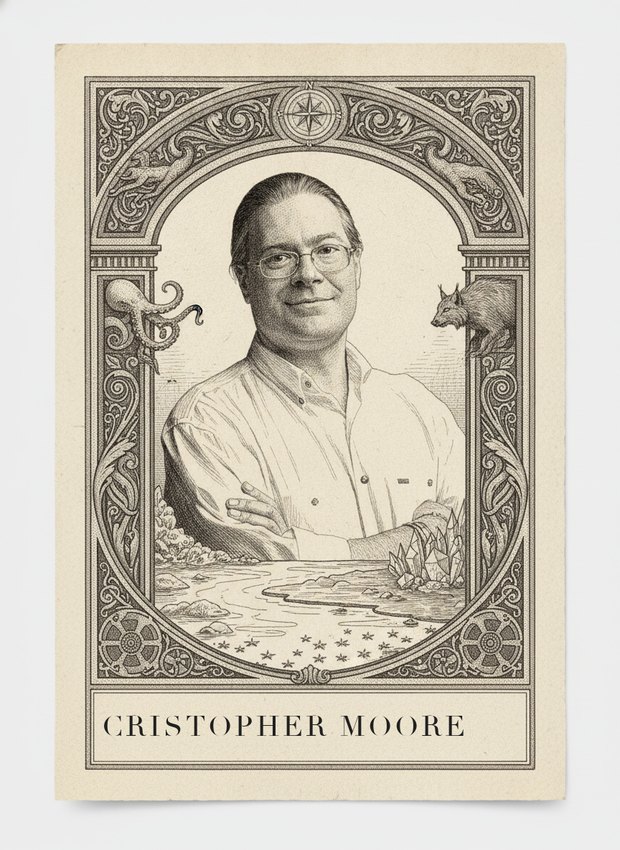
This problem is Moore's home turf in the most literal sense available in this roster. Trained in physics before moving to computer science, he spent the 1990s and 2000s working on exactly this interface: phase transitions in random satisfiability and constraint problems, the statistical physics of inference, and threshold phenomena in random structures such as community detection. His book with Stephan Mertens, The Nature of Computation, devotes sustained attention to random 3-SAT, the clause-to-variable ratio, and why hardness concentrates at the critical point, translating replica-method and cavity-style physics reasoning into language computer scientists can check. He has both halves the problem demands: the physics to explain the transition and the algorithmic literacy to say what message-passing and heuristic solvers can exploit in the easy regimes. Few specialists fit a problem this exactly.

The 3-SAT threshold is a direct descendant of a phenomenon Erdos discovered. With Renyi around 1960 he showed that random graphs undergo an abrupt structural change — the sudden emergence of the giant component — as the edge density crosses a critical value, the prototype sharp threshold in a random combinatorial ensemble. His probabilistic method, developed from the 1940s onward, is precisely the toolkit for proving that random formulas are almost surely satisfiable below a ratio and almost surely not above it: first and second moment arguments, concentration, counting solutions in expectation. He predates the 1990s physics vocabulary of replicas and clustering, and he would not supply the algorithmic exploitation half — he famously avoided computers. But the rigorous core of threshold analysis is his invention, and win-caliber here.
In the mind map
The same ideas, as concepts rather than history — in John's ML knowledge map.
44 figures are scored on this problem. Draw it in a battle to see where you land.