computability
Even approximating is hard
It is the 1990s, and a comforting fallback is under threat: if a problem is NP-hard to solve exactly, surely we can at least approximate it well. A stunning line of work says no — for some problems, finding a solution even close to optimal is itself as hard as solving them exactly. Establish this by reformulating what a proof is: a certificate a verifier can check by reading only a constant handful of randomly chosen bits, with high confidence. From that characterization, derive that approximating certain problems past a threshold is impossible unless the hierarchy collapses. Get it wrong and algorithm designers burn years chasing approximation ratios that provably cannot be achieved — this maps not just what is solvable, but what is even approachable.
Who this problem belongs to
The two figures whose methods fit it best, out of 39 in contention.
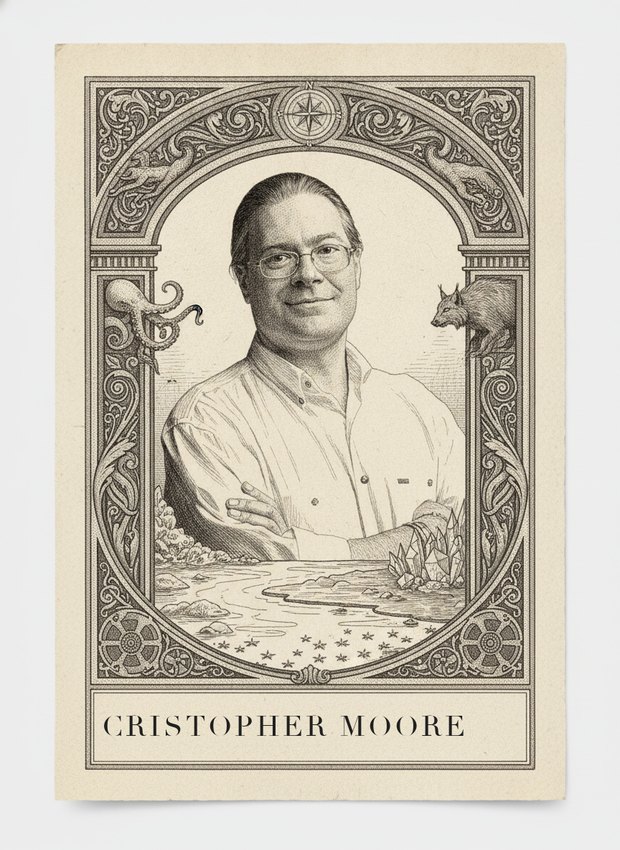
Moore's research on phase transitions in computational hardness directly engages the territory this problem occupies, studying exactly where and why certain combinatorial problems become hard not just to solve exactly but even to approximate well, using tools from statistical physics that illuminate the same threshold phenomena the PCP theorem formalizes. His textbook 'The Nature of Computation' treats probabilistically checkable proofs and hardness of approximation as core material, explaining the reformulation of proof verification that underlies this problem's resolution with the rigor a working theorist would demand. He is the modern figure best equipped to reconstruct and teach this exact result. He works as a contemporary complexity researcher and expositor rather than one of the theorem's original 1990s authors, which caps but does not diminish his deep, genuine fit.

Yao's foundational contributions to computational complexity theory, including communication complexity and randomized algorithm lower bounds, place him squarely within the theoretical tradition that produced the PCP theorem, and his deep, practiced fluency with reduction arguments and probabilistic proof techniques gives him genuine technical proximity to the machinery this problem's resolution requires. His research on the interplay between randomness and computational hardness engages directly with the kind of probabilistic verification this problem's reformulation of proof depends on. He works within the same broad theoretical tradition and era as the PCP theorem's development, applying closely related tools to complexity and cryptographic questions, though the specific hardness-of-approximation results are not his own. This remains a marginal, secondary connection at best.
In the mind map
The same ideas, as concepts rather than history — in John's ML knowledge map.
39 figures are scored on this problem. Draw it in a battle to see where you land.