causality
Which one is the cause?
It is the 2010s in Tübingen, and a deliberately minimal question is embarrassing the causal-inference orthodoxy: two variables, one scatterplot, no third variable, no intervention — altitude and temperature, say. Which causes which? The textbook answer is that observational data cannot say; the correlation is symmetric. But the mechanisms are not: if X causes Y, the distribution of the cause and the mechanism mapping cause to effect tend to be independent, algorithmically unrelated — and that asymmetry leaves fingerprints in the joint distribution. Formalize the principle, build methods that infer direction from pairs alone, and benchmark them against ground truth honestly. Get it wrong and 'causal discovery' becomes numerology; get it right and observational data gives up more than the orthodoxy allowed.
Who this problem belongs to
The two figures whose methods fit it best, out of 63 in contention.
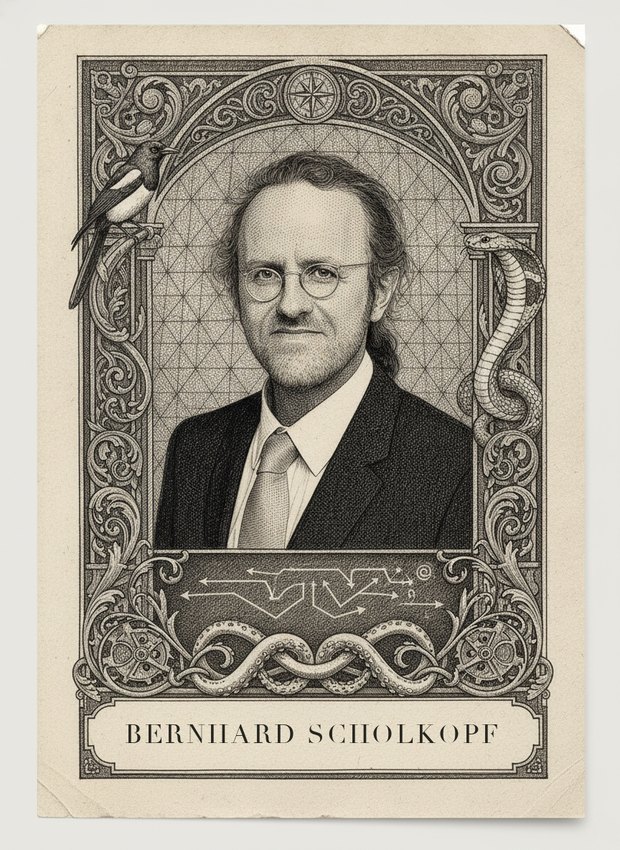
Scholkopf led the Tübingen group that built cause-effect pair discovery into a rigorous research program, developing additive noise models and the broader algorithmic-independence-of-cause-and-mechanism principle this exact problem describes, and personally co-authored the benchmark cause-effect pair datasets used to test these methods against ground truth. His causal machine learning agenda, kernel methods systematized for causal rather than merely predictive inference, is the direct intellectual lineage this problem draws its framing from, down to the altitude-and-temperature style example. His broader career bridging statistical learning theory and causal reasoning means the theoretical apparatus, the empirical benchmarking discipline, and the specific bivariate causal discovery techniques this problem calls for all trace substantially through his own published research, making him close to the strongest possible fit for this problem.
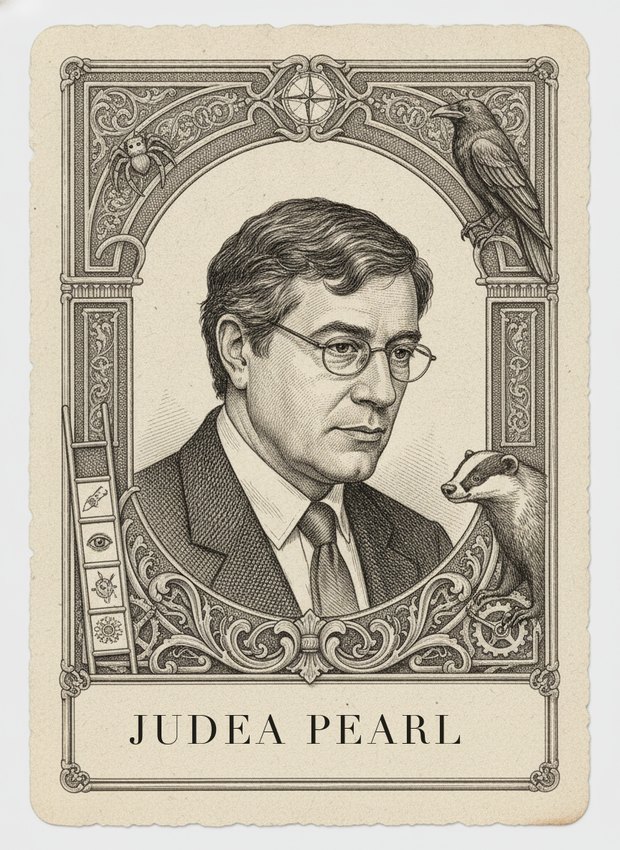
Pearl's do-calculus and structural causal models gave the field the formal vocabulary, distinguishing correlation from causation, mechanism from distribution, that makes a question like "which one causes which" precise rather than philosophical, and his causal revolution explicitly argued against the older orthodoxy that observational data alone can never speak to causal direction. His broader insistence that causal claims require causal assumptions, not just statistical ones, is the deep theoretical backdrop against which the algorithmic-independence principle this problem describes operates as a specific, testable such assumption. His own major technical apparatus, Bayesian networks and do-calculus, was built more for causal inference given a known or partially known graph than for the specific two-variable, no-third-variable discovery-from-pairs-alone problem this scenario poses, which the Tübingen school later specialized in, so his score reflects the deepest possible theoretical grounding just short of that specific technique.
In the mind map
The same ideas, as concepts rather than history — in John's ML knowledge map.
63 figures are scored on this problem. Draw it in a battle to see where you land.