It is 1996 at IBM, and a match is signed that the company cannot afford to lose twice: Deep Blue against Garry Kasparov, the strongest chess player who has ever lived. Build the machine — custom search hardware evaluating two hundred million positions a second, an evaluation function tuned with grandmaster help, an opening book, and endgame databases — and decide how to spend the budget between raw search depth and chess knowledge. Kasparov adapts between games; the machine's flaws will be probed by the best pattern-matcher on earth, on television. Lose and machine intelligence stays a punchline; win ugly, through a glitch Kasparov calls a human hand, and the victory is disputed for years. Both happened. Design for scrutiny as much as strength.
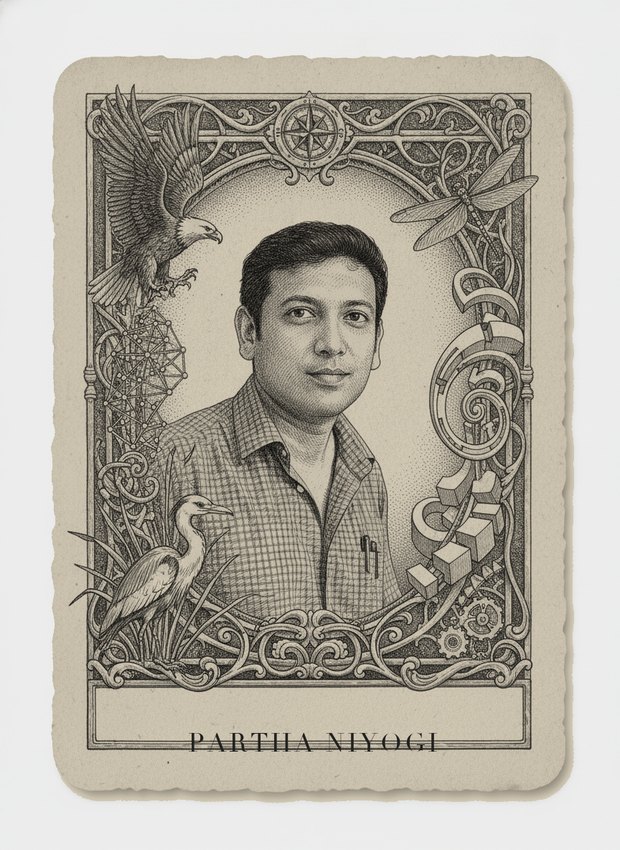
Niyogi's research on manifold learning, Laplacian eigenmaps, and the learning theory of speech and language, developed largely after this problem's 1996–1997 setting, addresses statistical structure in high-dimensional data and formal learnability questions, with no documented connection to chess, custom search hardware, or Deep Blue's hand-engineered, grandmaster-consulted evaluation-function design this problem specifically describes. His toolkit is geometric and statistical, a fundamentally different problem domain from the deterministic, brute-force search-plus-evaluation architecture Deep Blue's team actually built. His relevance to this problem is essentially nil, reflecting a genuine mismatch of research domain and era. Nothing in the documented historical record ties this figure's actual body of work to IBM's specific 1996-1997 engineering achievement against Kasparov.
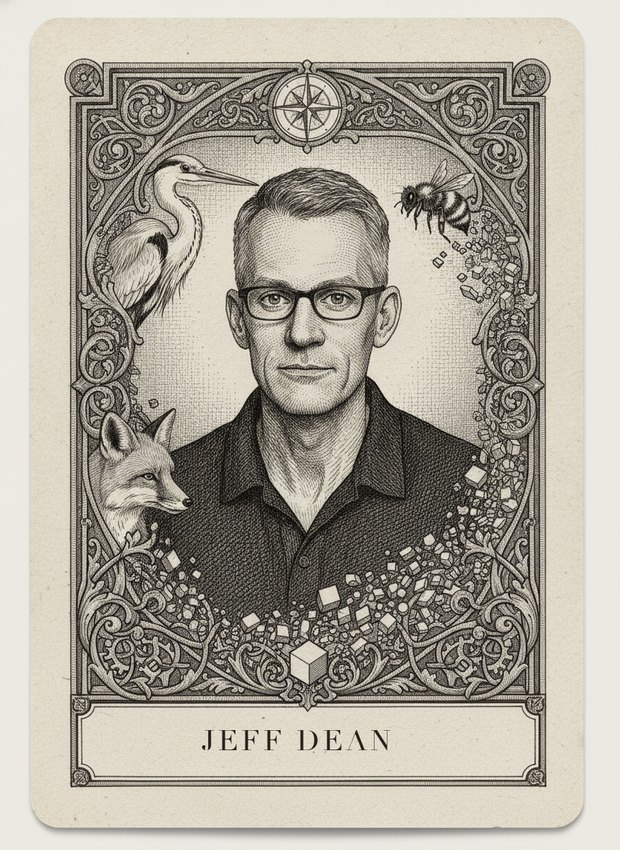
Dean's foundational systems work at Google, including MapReduce, Bigtable, and TensorFlow, built large-scale infrastructure decades after this problem's 1996–1997 setting, addressing distributed computing for machine learning rather than the custom, specialized search hardware Deep Blue's team actually engineered for chess-specific brute-force computation. His own documented research centers on distributed systems and machine-learning infrastructure at scale, a related but distinct engineering tradition from Deep Blue's purpose-built chess chips. There is no record of Dean personally contributing to competitive chess-engine engineering or the specific 1996–1997 IBM project. His relevance to this problem is a loose structural kinship in large-scale, purpose-built computing engineering rather than a direct historical contribution. Nothing in the documented historical record ties this figure's actual body of work to IBM's specific 1996-1997 engineering achievement against Kasparov.
Battle #66 · 8/10/2026, 11:35:52 AM · this result is deterministic: the same two personas on this problem always resolve the same way.