It is 1997 at Berkeley, and segmentation keeps failing the same way: methods that grow regions from local pixel similarity fragment every textured surface and leak across every soft boundary, because grouping is a global judgment being made with local evidence. Recast the image as a graph — pixels as nodes, affinities as weighted edges — and partition it by a criterion that charges a cut not by raw weight but by its share of each side's total association, so carving off one stray pixel stops being free. The optimum is NP-hard; show the relaxation that lands in the eigenvectors of a graph Laplacian, computable, principled, honest about its gap. Get it wrong and grouping remains hand-tuned heuristics; get it right and spectral methods enter vision's bloodstream.
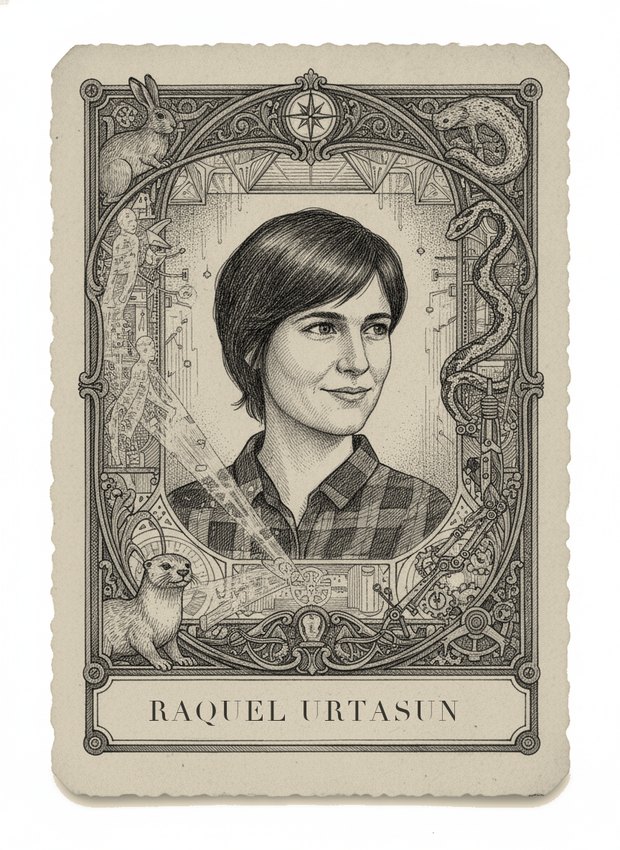
Chose The calibrated benchmark — wrong. Joint structured perception was the one that fit.
Urtasun's research on perception for self-driving vehicles depends on exactly the kind of reliable, principled image segmentation this problem's normalized-cuts method helped establish as a rigorous approach to grouping, since a self-driving system must partition a scene into coherent objects and surfaces before reasoning about them. Her practical engineering instinct that a segmentation failure has real downstream safety consequences aligns with this problem's stakes. She was not involved in developing the original 1997 normalized-cuts method, and her own research applies considerably more modern, learned segmentation techniques than the classical spectral relaxation this problem specifies, so the concrete 1997 deliverable belongs to Shi and Malik's original research program. The concrete 1997 deliverable belongs to Shi and Malik's original research program, not hers.
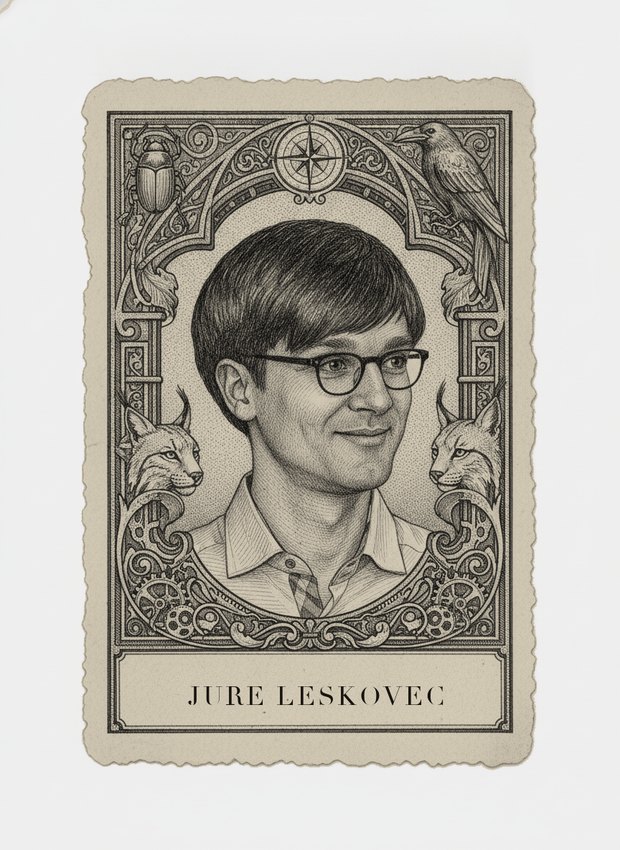
Spectral relaxation of an NP-hard graph cut, landing in the eigenvectors of a graph Laplacian, is machinery Leskovec has used and stress-tested about as hard as anyone. His work with Lang, Dasgupta and Mahoney on the network community profile measured conductance-based cuts across social graphs at a scale that forced honest confrontation with what spectral relaxations do and do not recover, and normalized-cut-style objectives are the standard baseline throughout the community-detection literature he helped shape. He is also fluent in exactly the move this problem turns on, normalizing a cut by each side's total association so that carving off one stray node stops being free. The gap is the other half: this is 1997 Berkeley vision, and the perceptual-organization insight and the design of pixel affinities are not his.
Battle #75 · 8/10/2026, 11:36:18 AM · this result is deterministic: the same two personas on this problem always resolve the same way.