It is 2012 in Toronto, and the ImageNet challenge — a million images, a thousand categories — has become computer vision's annual referendum, ruled by hand-engineered features whose error rate improves a fraction of a point a year. The bet on your desk is unfashionable: a deep convolutional network, tens of millions of parameters, trained end-to-end on two consumer gaming GPUs, with tricks — rectified units, dropout, aggressive augmentation — to keep a model this large from memorizing. The field's establishment considers this lineage refuted. Halve the error rate, publicly. Get it wrong and neural networks absorb one more decade of dismissal; get it right and every vision pipeline on earth is rebuilt within thirty-six months — the discontinuity by which the deep-learning era dates itself.
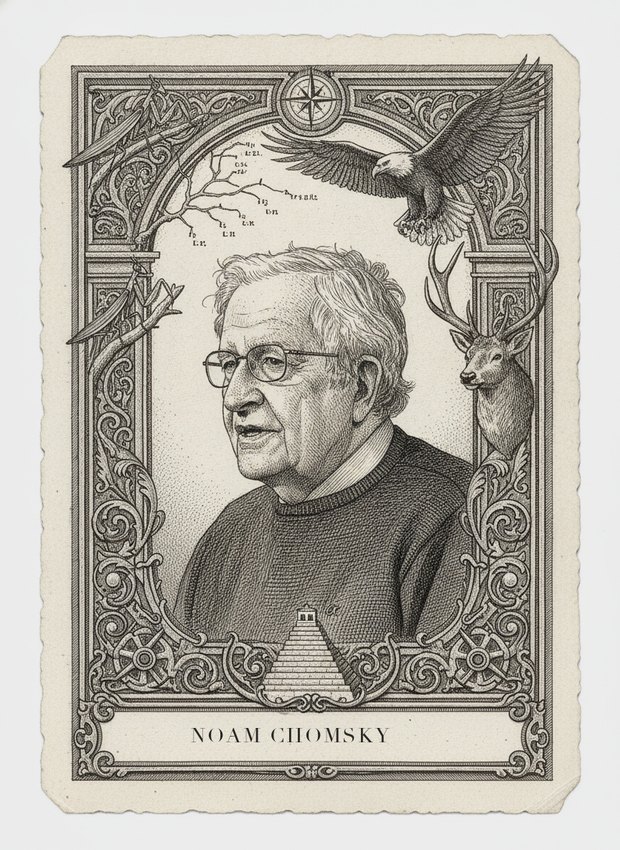
Chomsky's formal grammars and his broader, sustained critique of purely statistical, data-driven approaches to language represent almost the opposite philosophical bet from this problem's premise, that letting a flexible model learn structure from data at scale beats hand-specified representations, making him a genuine philosophical foil to AlexNet's entire thesis rather than a contributor to it. His own research is centered on syntax and generative linguistics, structurally quite distant from convolutional image classification and its statistical, data-hungry methodology. Nothing in his published work engages neural architecture design, GPU training, or benchmark vision competitions specifically, leaving this a distant and largely oppositional philosophical connection to this problem's actual 2012 engineering achievement and its result.
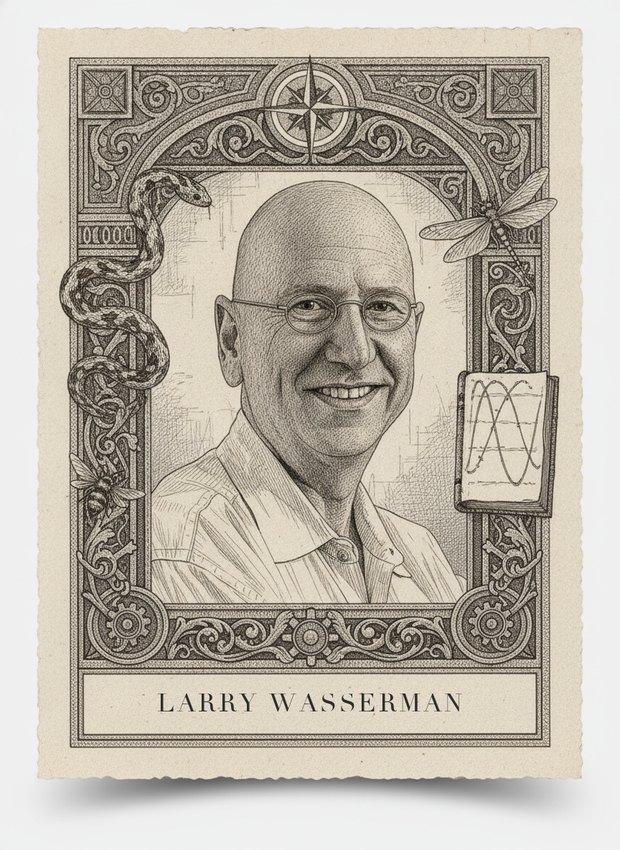
Wasserman's All of Statistics and his broader work bridging classical statistics and machine learning give him general facility with the statistical-learning landscape AlexNet's success disrupted, and his rigor about generalization and model complexity is relevant background for this problem's central anxiety about a model this large overfitting its training data. But his own research is primarily expository and theoretical rather than applied to building convolutional architectures or GPU training pipelines, and nothing in his published work directly engages ImageNet, deep networks, or the specific engineering tricks this problem's network required, leaving this a general statistical-competence connection rather than an applied contribution to this problem's actual 2012 engineering achievement and its architecture.
Battle #92 · 8/10/2026, 11:37:15 AM · this result is deterministic: the same two personas on this problem always resolve the same way.