systems
The software that may not fail
It is 1968 at the MIT Instrumentation Laboratory, and the Apollo Guidance Computer — 72 kilobytes of hand-woven rope memory — must fly astronauts to the lunar surface. Structure the flight software for a crewed lander: priority scheduling so the critical jobs always run, overload shedding so a flood of spurious inputs cannot drown them, graceful degradation when the impossible happens anyway. There is no patch after launch and no second attempt during descent. In July 1969, minutes above the Moon, a misconfigured radar will flood the computer with exactly such spurious interrupts — and the architecture's restart-and-shed-load design will decide, in seconds, between landing and abort. Design as if two lives and a decade of national effort hang on your scheduler. They do.
Who this problem belongs to
The two figures whose methods fit it best, out of 42 in contention.

This is Hamilton's own desk. As director of the Software Engineering Division at MIT Instrumentation Lab, she designed the AGC's asynchronous executive: priority-based scheduling, restart protection, and overload shedding so that when the 1969 rendezvous radar left on by mistake flooded the computer with spurious cycle-stealing interrupts, the system recognized the overload, discarded the low-priority jobs, and kept the landing-critical ones running through Program Alarms 1201 and 1202. She coined 'software engineering' precisely because existing practice had no discipline adequate to this stakes level, and she personally built the error-handling and priority-display logic that made the difference in real time above the Moon. No score above hers is possible; this problem is a description of her actual work.
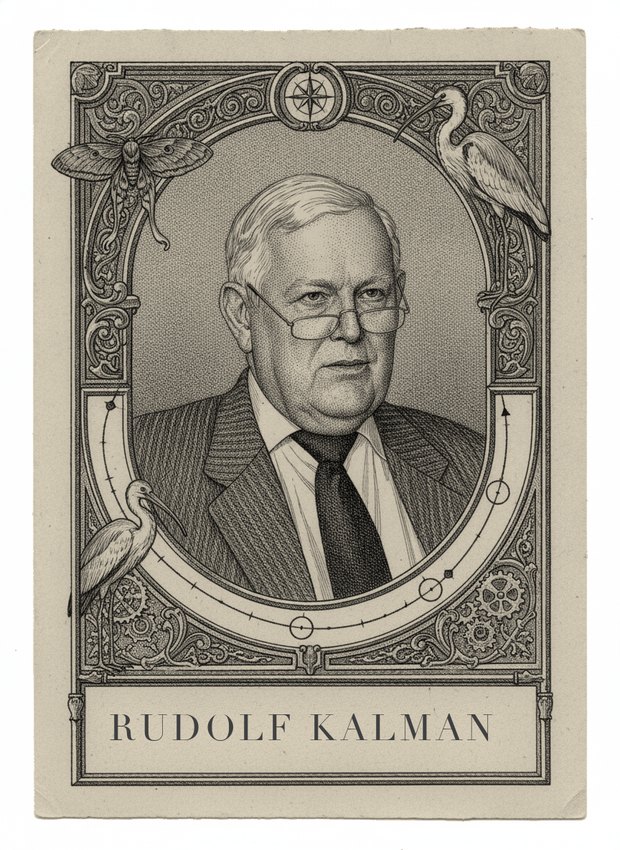
Kalman's filter is not an analogy here, it is inside the actual spacecraft: the Apollo Guidance Computer used Kalman filtering (adopted after his 1960 paper reached NASA via Stanley Schmidt) to fuse noisy sensor data into a real-time state estimate for navigation and guidance, running on exactly this hardware under exactly these constraints. That is about as direct a historical hit as this pool offers for the guidance-and-navigation half of the problem. The deduction is scope: Kalman supplied the estimation mathematics running inside the loop, not the executive's priority scheduling, overload shedding, or restart architecture that is the problem's actual centerpiece and Hamilton's specific contribution, so his fit is real but partial.
42 figures are scored on this problem. Draw it in a battle to see where you land.