systems
Ship it to a hundred contributors
It is 1998, and an operating-system kernel begun as a student's hobby is now maintained by thousands of strangers across every time zone — no company, no org chart, no one who can be fired. Coordinate a codebase touched by this crowd: version control that makes merging cheap enough for distributed anarchy, integration discipline that keeps the mainline releasable, and a trust structure — maintainers, lieutenants, review — that scales without central authority. The tooling and the culture are one design problem; solve only the tooling and the project forks itself to death. The stakes have outgrown the hobby: this kernel is heading for every server, phone, and embedded device on earth, and the collaboration model you design becomes the template for how humanity builds shared software at all.
Who this problem belongs to
The two figures whose methods fit it best, out of 41 in contention.

This is literally Torvalds's 1998 desk. He had released Linux in 1991 and by 1998 was coordinating a mailing-list-and-patch workflow across thousands of volunteer contributors with no company and no org chart, exactly the crisis this problem describes; he would go on to formalize the lieutenant structure (subsystem maintainers funneling patches upward) and, when that workflow finally broke under scale in 2005, personally write Git in ten days to make distributed merging cheap enough for the anarchy. His combination of technical taste (what belongs in the mainline) and social authority (a benevolent-dictator trust structure that scales without a company) is exactly the one-design-problem this brief demands. No score above his is defensible.
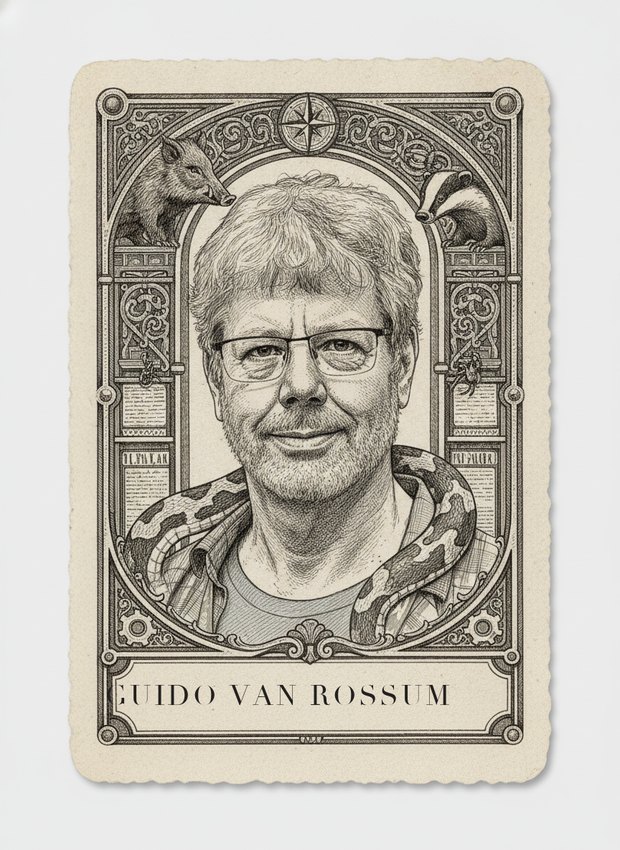
Van Rossum is running the closest contemporaneous analog to this exact problem: by the late 1990s Python already has an open, mailing-list-driven contributor community that he governs as 'Benevolent Dictator for Life,' the same taste-plus-trust-hierarchy structure Linux needs, formalized later into the PEP process for proposing and reviewing changes. His experience balancing openness to outside contributors against a coherent technical vision is directly transferable. The deduction is scale and tooling: Python's contributor base and merge volume in this era are far smaller than the Linux kernel's, and he never had to solve the technical cheap-merging problem (CVS/Git-class tooling) that Torvalds's kernel work forces.
41 figures are scored on this problem. Draw it in a battle to see where you land.