optimization
Cool it slowly
It is 1983, and a metaphor from metallurgy is about to become an algorithm. A rugged landscape — a chip layout, a routing, a spin glass — is riddled with local minima that trap any downhill method. The analogy: cool a metal slowly and its atoms settle into a low-energy crystal; cool it fast and they freeze into defects. Import this. Accept uphill moves with probability set by a temperature you lower on a schedule, so early exploration escapes traps and late refinement locks in a good solution. Set the schedule and acceptance rule so the method provably tends toward the global optimum given enough time. Get it wrong and cool too fast, freezing into a bad local minimum; too slow, wait forever — the schedule is the whole craft.
Who this problem belongs to
The two figures whose methods fit it best, out of 71 in contention.
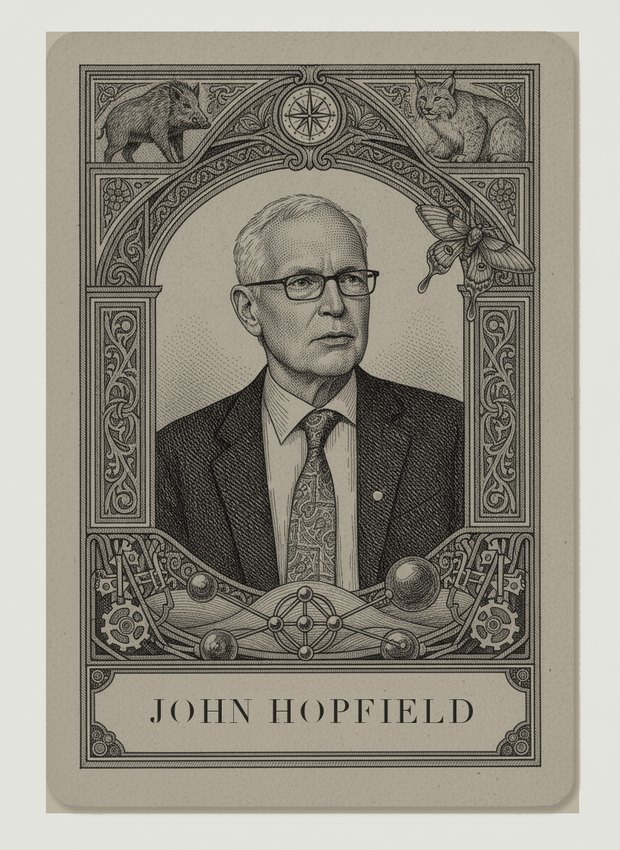
Hopfield's 1982 energy-based neural networks, recognized with a 2024 Nobel Prize, framed computation as a physical system settling into low-energy states, the exact statistical-mechanics metaphor simulated annealing imports directly: a rugged energy landscape with local minima that trap purely downhill dynamics. His attractor-network formalism gave the field the vocabulary, energy, temperature-like stochasticity, basins of attraction, that Kirkpatrick and collaborators used almost immediately afterward to formalize simulated annealing itself in 1983. He did not author the annealing schedule or its convergence proof directly, that credit belongs to Kirkpatrick, Gelatt, and Vecchi, but the physical framing this problem's metaphor depends on is substantially his contribution. His score reflects deep foundational proximity. His name belongs at the top of any lineage chart for this problem's underlying physical metaphor.
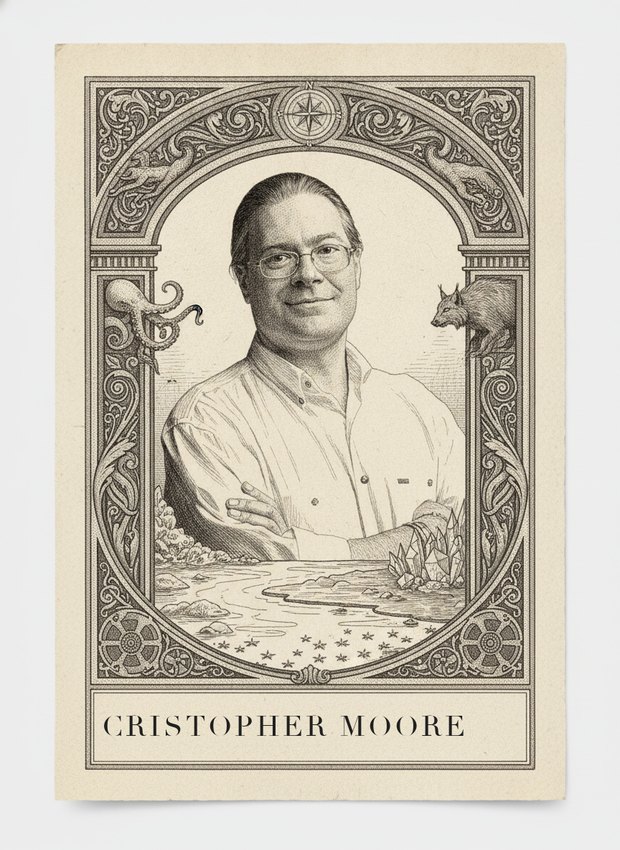
Moore's research on phase transitions in NP-hard problems and statistical-physics approaches to computational hardness places him directly in the intellectual tradition simulated annealing descends from, the same statistical-mechanics community that produced spin glasses, the rugged landscapes this problem explicitly analogizes to chip layouts and routing problems. His work with physicist collaborators on when local search escapes traps versus when it freezes into poor local minima directly illuminates the cooling-schedule tradeoff this problem's 'the schedule is the whole craft' framing describes. He did not co-author the original 1983 Kirkpatrick paper, but his research career has substantially deepened understanding of exactly this phenomenon. His score reflects strong direct relevance. Cristopher Moore's name would appear early in any serious literature review a team assembled before attempting to build and certify a solution to exactly this problem.
In the mind map
The same ideas, as concepts rather than history — in John's ML knowledge map.
71 figures are scored on this problem. Draw it in a battle to see where you land.