search
Sequence the robot's actions
It is 1969 at Stanford Research Institute, and a wheeled robot named Shakey must do something no machine has done: figure out for itself the sequence of actions that transforms the world from how it is into how it should be — push this box to that room, which first requires reaching it, which first requires a clear path. Represent actions by their preconditions and effects, world-states as sets of facts, and search for a sequence carrying the start state to the goal. The space of possible plans explodes. Get it wrong and the robot freezes, unable to chain a plan, or executes steps that undo each other — classical planning founds every system that reasons about "what must I do first."
Who this problem belongs to
The two figures whose methods fit it best, out of 64 in contention.
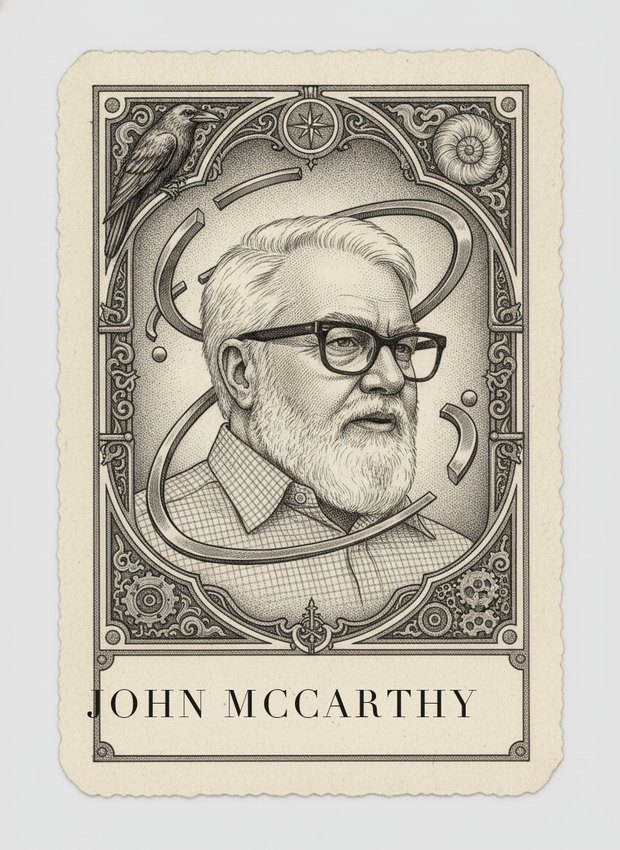
McCarthy's Stanford AI Lab was the direct academic sibling of SRI's Shakey project, and his foundational work formalizing action, situation calculus, and the frame problem (naming the exact puzzle of tracking what changes and what stays the same when a robot acts) gave Shakey's designers the logical vocabulary to represent preconditions, effects, and world-states as sets of facts in the first place. His broader vision of AI as symbolic reasoning over formally represented knowledge is the direct intellectual scaffolding classical planning was built on. He did not personally design STRIPS (Fikes and Nilsson's 1971 planner), but the situation-calculus formalism it used is substantially descended from his own, making him the deepest conceptual authority this problem has, just short of the engineers who actually built the robot.
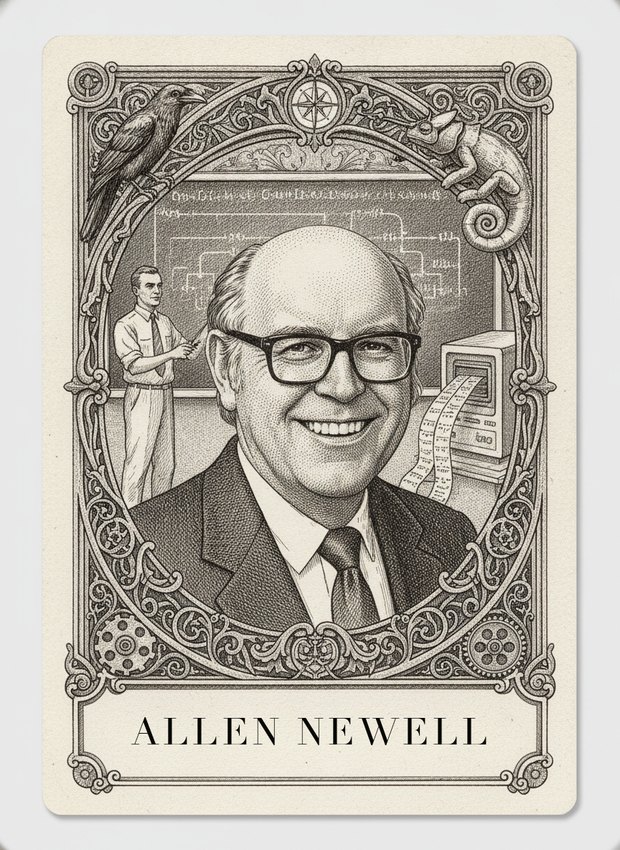
Newell's General Problem Solver, built with Simon years before Shakey, was the first program to represent problem-solving as search through a space of states connected by operators with preconditions and effects, exactly the means-ends framework STRIPS would formalize for Shakey in 1969 — represent the goal, find operators that reduce the gap between current and goal states, and chain them into a plan. His cognitive-architecture work treating planning as heuristic search through an exploding space of possible action sequences is precisely this problem's 'the space of possible plans explodes' framing. He did not build Shakey himself, so his score reflects deep, direct conceptual authorship of the planning paradigm rather than hands-on engineering of the specific 1969 robot and its STRIPS-based planner.
Fought here
In the mind map
The same ideas, as concepts rather than history — in John's ML knowledge map.
64 figures are scored on this problem. Draw it in a battle to see where you land.