nlp
Translate Russian by machine
It is 1954 in a Georgetown auditorium, and IBM has staged a demonstration for the press: a computer translates sixty Russian sentences into English, and the headlines promise fluent machine translation within five years. You know what the demo hides — six grammar rules, a 250-word vocabulary, and sentences chosen to fit them. Assess the real problem honestly: what translation actually requires of syntax, meaning, and world knowledge; what the era's machines can and cannot represent; and what should be promised to the funders now writing checks on the headlines. Get it wrong and the field books a decade of promises it cannot keep — and when the reckoning report lands in 1966, machine translation's funding, and half of AI's credibility, goes down with it.
Who this problem belongs to
The two figures whose methods fit it best, out of 46 in contention.
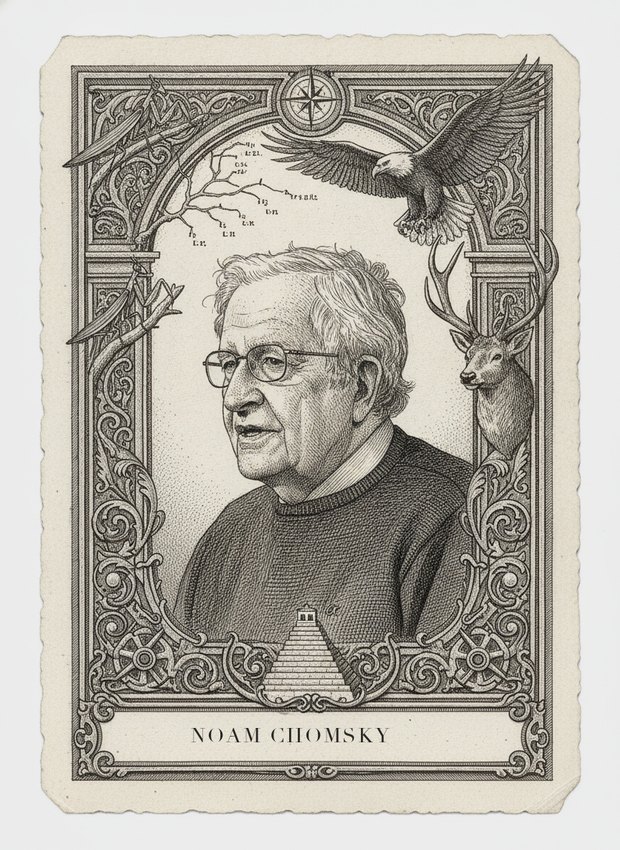
Chomsky's formal analysis of language, crystallizing just a few years after this 1954 demo in Syntactic Structures (1957), diagnosed exactly why the Georgetown-IBM system's six grammar rules and 250-word vocabulary could never scale to real translation: natural language syntax is generative and recursive in ways finite rule sets and phrase-substitution tricks cannot capture, let alone the deeper problem of meaning and world knowledge the demo's organizers were quietly ignoring. His critique of behaviorist, pattern-matching approaches to language, aimed at Skinner but applicable to this demo's shallow substitution tricks, gave the field exactly the honest technical vocabulary needed to tell funders what translation actually requires and what six rules manifestly do not provide. He is the single most directly relevant critic this hype-versus-capability problem could summon. Score: near-maximal.
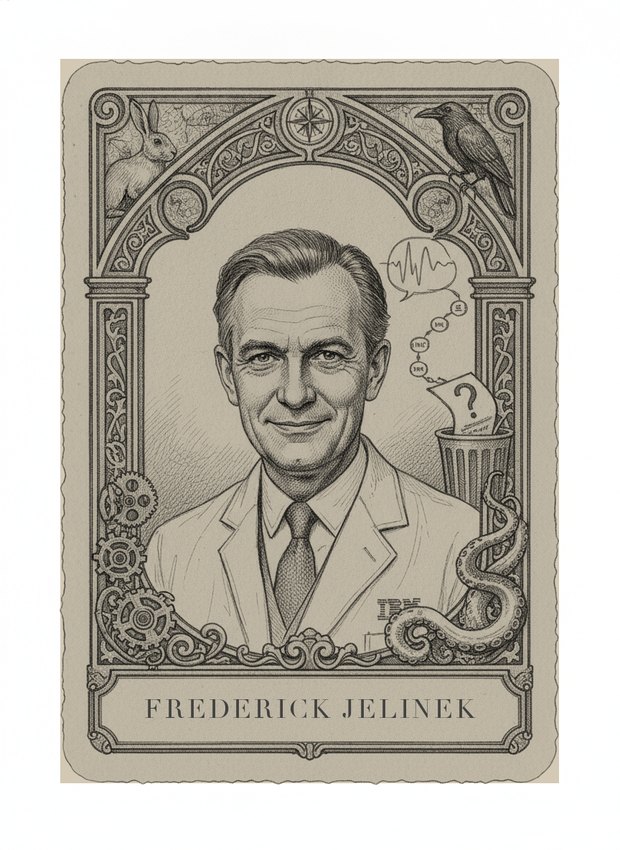
Jelinek's later career, built on the blunt maxim 'every time I fire a linguist, the performance of the speech recognizer improves,' is the historical answer to what this 1954 demo got wrong twice over: not just that six rules were too few, but that the entire rules-based paradigm the field would spend a decade chasing was the wrong bet, with statistical models trained on real data eventually proving what should have been promised instead. Had Jelinek been advising the funders in 1954, his instinct — measure real performance on real data honestly, distrust rules that look clever on cherry-picked sentences — would have punctured the Georgetown demo's inflated claims immediately. He scores just behind Chomsky because his own empirical answer arrived decades later, at IBM in the 1970s and 1980s, not in the room in 1954.
Fought here
In the mind map
The same ideas, as concepts rather than history — in John's ML knowledge map.
46 figures are scored on this problem. Draw it in a battle to see where you land.