It is 1954 in a Georgetown auditorium, and IBM has staged a demonstration for the press: a computer translates sixty Russian sentences into English, and the headlines promise fluent machine translation within five years. You know what the demo hides — six grammar rules, a 250-word vocabulary, and sentences chosen to fit them. Assess the real problem honestly: what translation actually requires of syntax, meaning, and world knowledge; what the era's machines can and cannot represent; and what should be promised to the funders now writing checks on the headlines. Get it wrong and the field books a decade of promises it cannot keep — and when the reckoning report lands in 1966, machine translation's funding, and half of AI's credibility, goes down with it.

Radford's work on GPT and CLIP, developed in the twenty-first century, represents the mature, large-scale data-driven answer to language capability that this 1954 problem's funders could not have imagined, let alone been honestly promised, given the era's computational constraints. His research demonstrates decisively that real language capability requires scale far beyond anything achievable with six rules and a 250-word vocabulary. But his direct engagement with this problem's actual historical moment, the specific Georgetown demo, or 1950s AI funding politics is entirely absent; his relevance is purely retrospective technical vindication rather than any contemporaneous engagement with the honesty-to-funders question this problem actually poses. His contribution belongs entirely to the far side of the seventy-year gap this problem is implicitly measuring between promise and delivery.
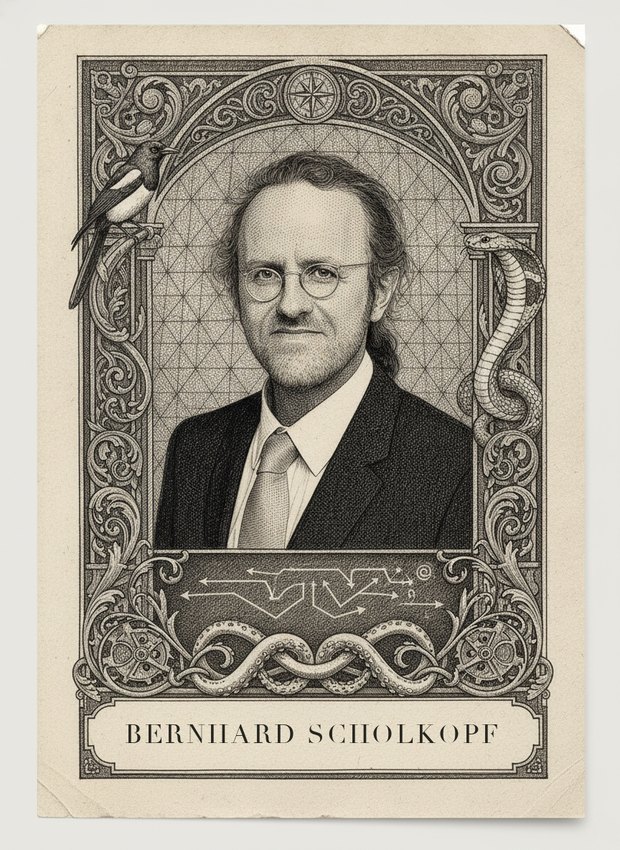
Scholkopf's systematization of kernel methods gave machine learning rigorous, principled tools for capturing complex, nonlinear structure in data without hand-specifying every rule explicitly, a philosophical cousin of the honest, data-driven answer this problem's 1954 funders should have received instead of a demo built on six brittle rules. His causal machine-learning work also reflects real concern for distinguishing genuine structure from superficial correlation, a discipline relevant to honestly assessing a rigged demonstration. But his career, situated in the 1990s and after, addressed statistical learning theory generally, never machine translation or 1950s AI funding specifically, keeping his relevance thin and largely generic to this problem. His actual engagement with translation, syntax, or 1950s funding politics is nonexistent, keeping this connection philosophical rather than historically grounded in any direct way.
Battle #84 · 8/10/2026, 11:36:44 AM · this result is deterministic: the same two personas on this problem always resolve the same way.