nlp
The imitation game, scored
It is 1950 in Manchester, and the question "can machines think?" is generating more heat than light in the philosophy journals. Replace it with an experiment: an interrogator, two hidden respondents — one human, one machine — and five minutes of typed conversation. Specify the protocol so it actually measures something: what the judges may ask, what counts as passing, and — hardest — what a pass would and would not prove, because a machine that wins by evasion and canned wit has demonstrated a skill, not a mind. Get the operationalization wrong and the field spends seventy years arguing with a strawman — or, worse, ships conversational systems whose fluency is mistaken for understanding by users, judges, and eventually courts, with the confusion built into the benchmark itself.
Who this problem belongs to
The two figures whose methods fit it best, out of 63 in contention.
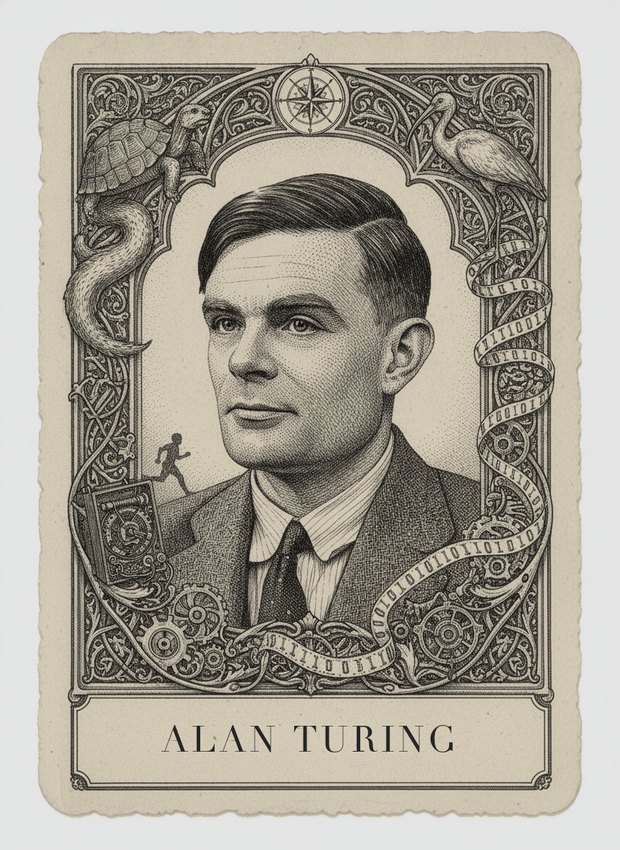
This problem is Turing's own paper, not an application of his ideas to something else. His 1950 'Computing Machinery and Intelligence,' published in Mind, proposed replacing the unanswerable 'can machines think?' with exactly this operational test: an interrogator, a hidden human, a hidden machine, and a fixed period of typed conversation, judged by whether the interrogator can reliably tell which is which. Turing anticipated the objections that would recur for seventy years — the argument from consciousness, Lady Lovelace's objection that machines can only do what they're programmed to do — and answered them in the same paper. He worked with 1950s computing power, no learned language models, imagining a test decades before anything could plausibly attempt it. That the protocol still needs defending in 2026 measures how well he specified the hard question.
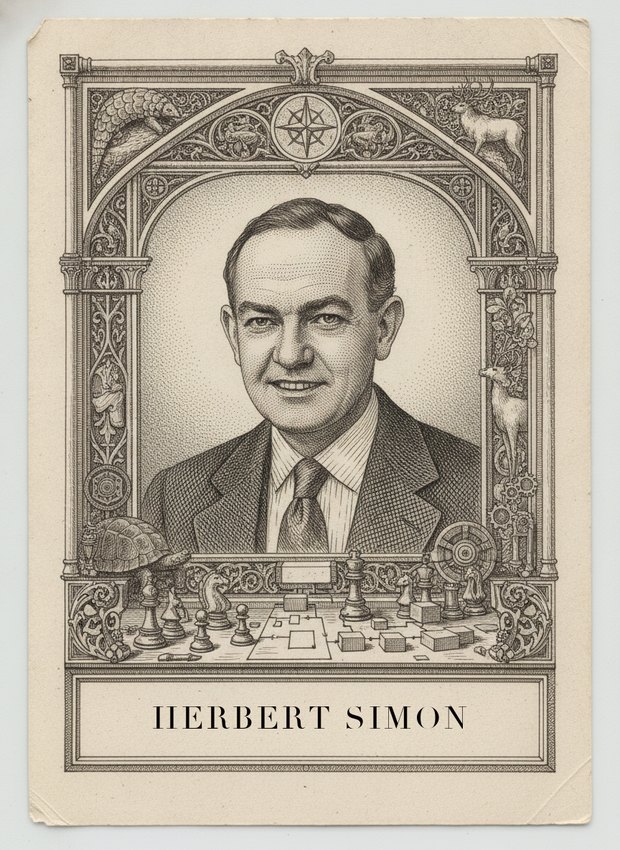
Simon, working with Newell at RAND and Carnegie Mellon through the 1950s, built some of the first programs explicitly claimed to exhibit general intelligence — the Logic Theorist in 1956 and the General Problem Solver in 1957 — and had to confront directly what would count as evidence a machine was thinking rather than merely computing. His physical symbol system hypothesis, developed with Newell, was itself an attempt to give 'intelligence' an operational, testable definition grounded in symbol manipulation rather than philosophical intuition, the same move Turing's test makes for behavior. Simon's Nobel-winning work on bounded rationality further insisted cognition be studied through what agents actually do under real constraints. His toolkit predates modern language models and never confronted an interrogator judging fluency specifically, but operationalizing intelligence claims was his life's work.
Fought here
In the mind map
The same ideas, as concepts rather than history — in John's ML knowledge map.
63 figures are scored on this problem. Draw it in a battle to see where you land.