Here is a single dataset and two irreconcilable mandates handed to you at once. The bank wants the most accurate possible predictions of who will default — it does not care why, only that the ranking is right. The regulator wants a defensible account of which factors actually cause default — accuracy matters less than the causal story holding. These are not the same task, and the model that wins one can lose the other: a black box may predict beautifully while explaining nothing; a clean causal model may forecast worse. Show precisely why the best answer differs by mandate, and refuse to pretend one model serves both. Get this wrong and someone acts on a prediction as if it were a cause — intervening on exactly the wrong lever.
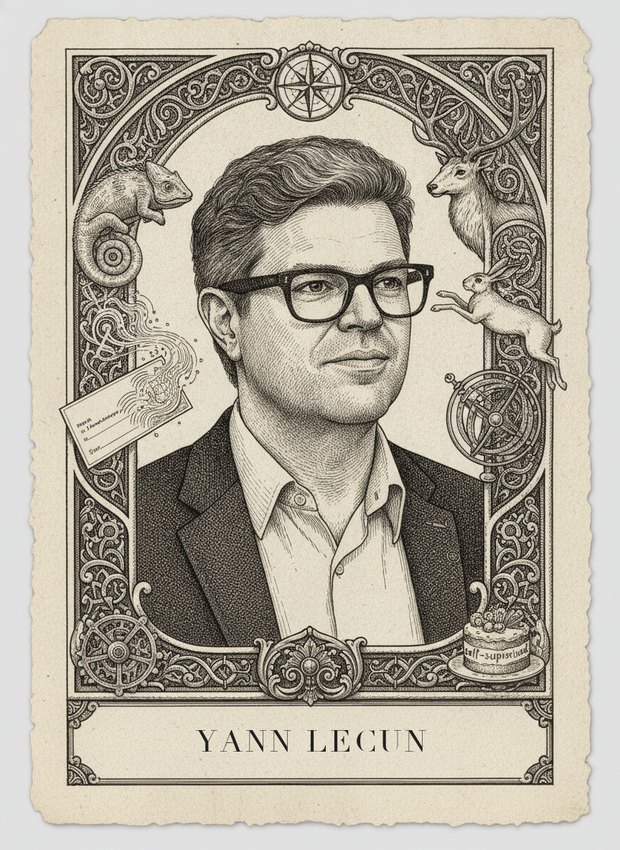
Chose Energy-based / self-supervised scoring — right call.
LeCun's convolutional networks (1989-1998) were proven on exactly the bank-like industrial task of his era — reading checks and digits at scale, where accuracy was the only mandate and no one asked the network why. His energy-based-model framework gives him a unified view of learning as shaping a scoring function, firmly predictive in orientation. He has engaged the causality question mainly through the lens of world models and self-supervised learning — the claim that predictive models of consequences are how intelligence works — which blurs rather than sharpens this problem's distinction. For tabular default data his architectures hold no particular edge over boosted trees, and he offers the regulator no identification machinery or interpretability program. A defining figure of the predictive culture, oblique to the confrontation itself.
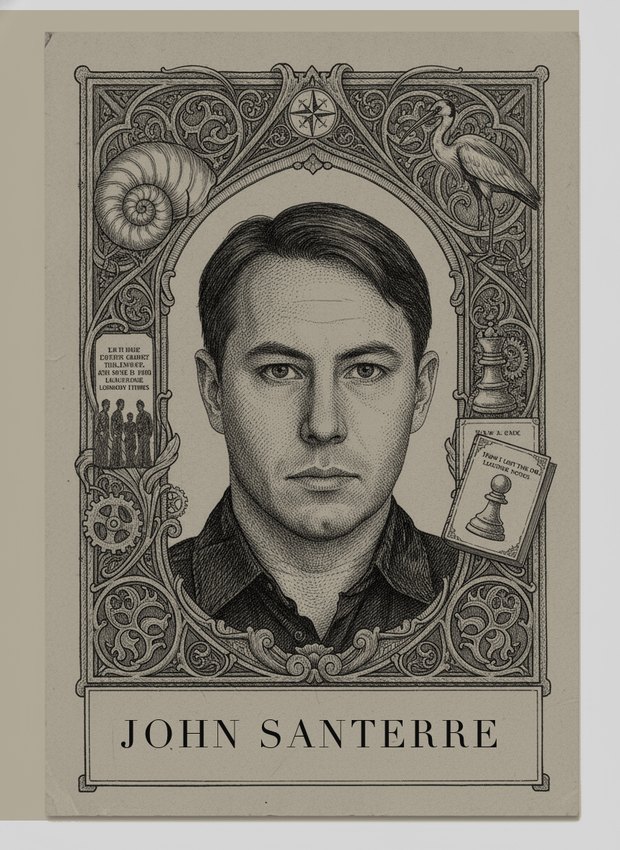
The professor has taught the two-cultures debate to hundreds of Berkeley students, complete with the Breiman paper, the Pearl gospel, and a slide titled 'correlation is not causation' that he is fairly sure at least one person read. Yet here he stands, on a battlefield flanked by Breiman himself, Pearl himself, and Shalizi with footnotes, holding a whiteboard marker and a consulting invoice. The bank asks for the ranking; he suggests forming a working group. The regulator asks which factors cause default; he says 'great question' and assigns it as homework. It is the fate of the generalist who brings AI to companies: fluent in every position in this fight, and the only person present who loses to all of them on their own turf. Score: zero, defensibly identified.
Battle #151 · 8/10/2026, 11:40:37 AM · this result is deterministic: the same two personas on this problem always resolve the same way.