It is wartime, and sequential methods are being born under the pressure of not wasting a single observation. Now the setting is a dose-finding trial: patients arrive one at a time, and you must choose each one's dosage using everything the earlier patients taught you — too low wastes the chance to help, too high risks harm. You are balancing two goods that pull apart: the welfare of the patient in front of you against knowledge for the thousands who come after. Design the trial that adapts as results arrive and defend the ethics of every escalation. Get it wrong and you either endanger volunteers chasing information or learn too slowly to help anyone — the sequential structure is what makes the trade-off honest.
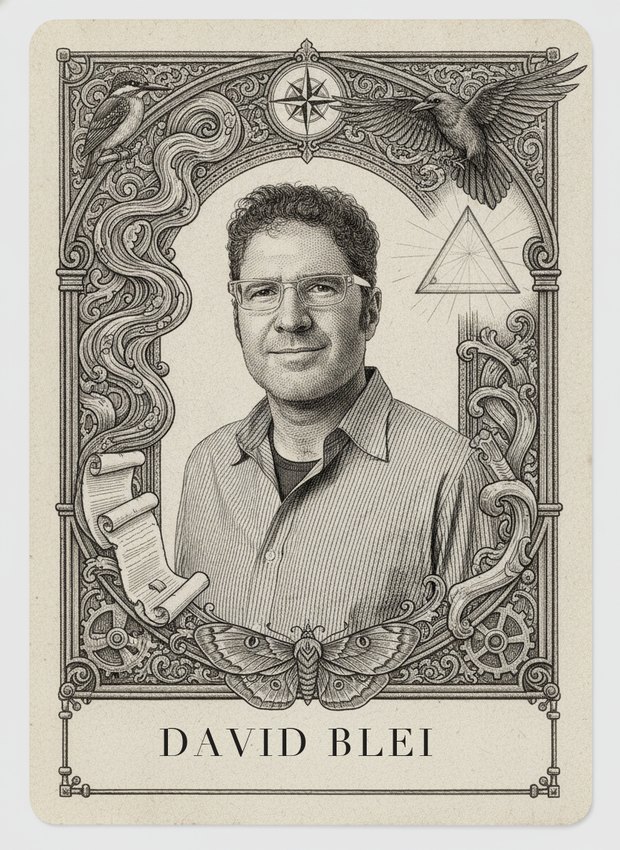
Chose The deconfounder — wrong. Scalable variational inference was the one that fit.
Blei made variational inference practical and scalable (2000s-10s), turning Bayesian posterior computation into something fast enough for real applications, which matters because Bayesian adaptive dose-finding (continual reassessment) needs a posterior over the dose-response curve updated after each patient. His tools could power the inference engine inside such a design. But Blei's signature work is topic models and unsupervised structure discovery, not sequential decision-making or experimental design; he brings the computational machinery for updating beliefs but not the escalation policy, stopping theory, or ethics of human trials. His contribution is the practical Bayesian updating that an adaptive design consumes, a genuine enabling technology, while the decision loop that decides the next dose and defends it belongs to the decision-theory and clinical-trial traditions rather than to variational inference itself.

The professor draws his card, glances at the roster, and quietly sets it face down. Here sits Wald, who literally invented sequential analysis under wartime pressure to avoid wasting a single observation; Susan Murphy, who built adaptive dose-escalation and dynamic treatment regimes into modern clinical practice; Bellman, whose dynamic programming is the very grammar of deciding one patient at a time. Santerre teaches this material at Berkeley, can sketch the continual-reassessment method on a whiteboard, and will happily explain to a grad student why the sequential structure makes the ethics honest. But explaining the greats is not being them. On their own turf, against the people who created the toolkit, the host loses deterministically, which is exactly the joke. Zero. He tips his cap to Wald and takes notes.
Battle #160 · 8/10/2026, 11:41:09 AM · this result is deterministic: the same two personas on this problem always resolve the same way.