It is the 1980s and 90s, and a strange power is discovered: a computationally limited verifier can become convinced of a claim it could never check itself, by interrogating a powerful but untrusted prover through rounds of random challenges. Formalize interactive and probabilistically checkable proofs, and pin down their astonishing reach — that with interaction and randomness, the set of verifiable statements swells enormously, and that a written proof can be spot-checked at a few random places to catch any flaw with high probability. The definitions are the achievement. Get them wrong and you either trust an untrustworthy prover, or fail to see that verification can be radically cheaper than discovery — a gap grounding modern cryptography and delegated computation.

Chose The probabilistic method — right call.
Erdos's probabilistic method, developed from the late 1940s onward, proved that randomness could establish the existence of combinatorial objects no direct construction could easily produce, a deep methodological cousin of interactive proofs' insight that randomized interaction can establish truths no deterministic check could efficiently verify. His comfort reasoning about what holds with high probability, rather than with certainty, resonates structurally with the soundness guarantees interactive proof systems provide. But Erdos worked primarily in extremal combinatorics and number theory, not in computability or complexity theory proper, and had no direct historical engagement with Turing machines, verification protocols, or the specific complexity-theory literature that produced interactive and probabilistically checkable proofs in the 1980s and 90s.
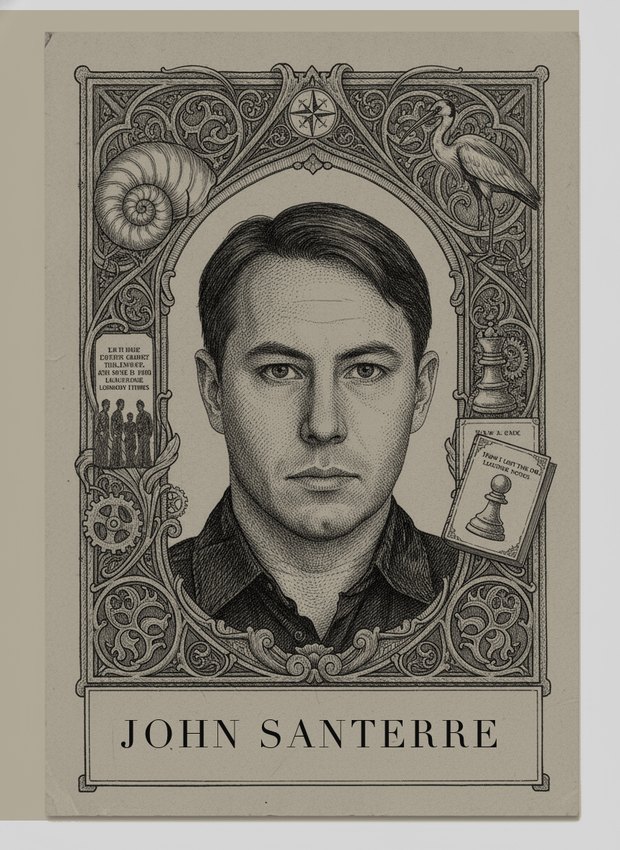
The professor stands at the whiteboard trying to explain why a verifier that flips coins can catch a lying prover with overwhelming probability, and by the third random challenge has lost the thread of his own argument. Cynthia Dwork, three seats over, has already sketched the zero-knowledge protocol on a napkin, correctly, without looking up. This is, in fairness, exactly the kind of result John finds genuinely delightful to teach and genuinely incapable of reproducing from scratch under exam conditions — he can gesture convincingly at 'probabilistically checkable' for a semester and still fumble the soundness bound live. He teaches the slide. He does not survive the oral defense. Some things are best appreciated, not attempted, and this is one of them.
Battle #27 · 8/9/2026, 6:19:41 PM · this result is deterministic: the same two personas on this problem always resolve the same way.