It is 1949 at Bell Labs, and Claude Shannon is writing the paper that will found computer chess before any machine can run it. Sketch a complete design: represent the board, define an evaluation function from material and mobility, and choose between searching every line to fixed depth or selectively following plausible moves — the brute-force and intuition strategies, named and costed decades before hardware can test either. The arithmetic is brutal: the game tree holds more positions than atoms, so the design must argue from principle, not experiment. Get the framing wrong and the field inherits a dead end for its first canonical problem; get it right and fifty years of machines climb the ladder this one paper builds.
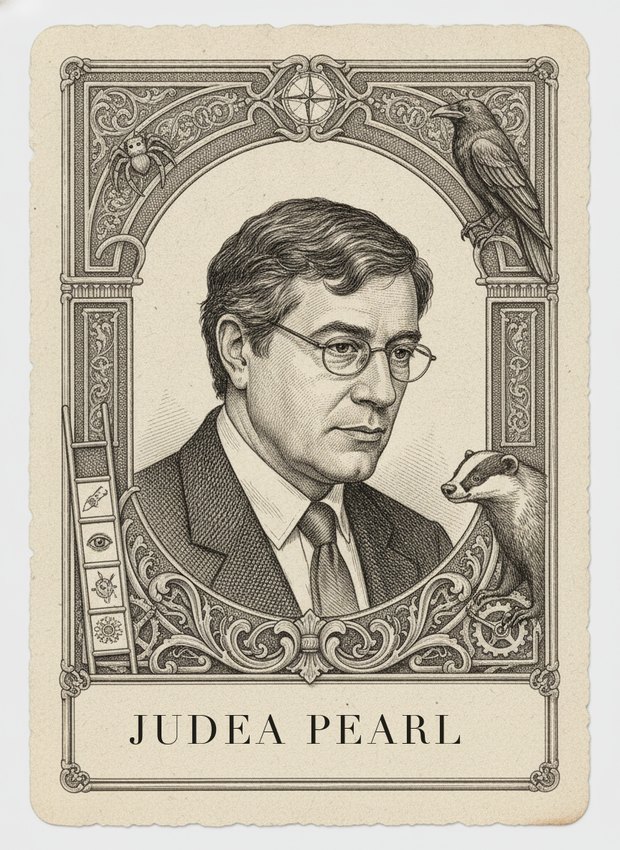
Chose The Bayesian network with belief propagation — wrong. The admissible heuristic for search was the one that fit.
Pearl's later research on heuristic search, including his rigorous analysis of best-first search algorithms and admissible heuristics in Heuristics (1984), gives precisely the kind of formal apparatus this problem's design would eventually need to justify a selective, Type-B-style search strategy over brute-force enumeration — a quantitative treatment of when heuristic guidance pays off. His work arrives 35 years after this problem's 1949 setting and addresses general heuristic search theory rather than chess-specific evaluation-function design; he has no documented direct contribution to chess programming itself. His relevance to this problem is strong general search-theoretic grounding that would sharpen the design's justification for selectivity, imported anachronistically from a later and more rigorous research tradition than the paper-design task this scenario specifically poses.
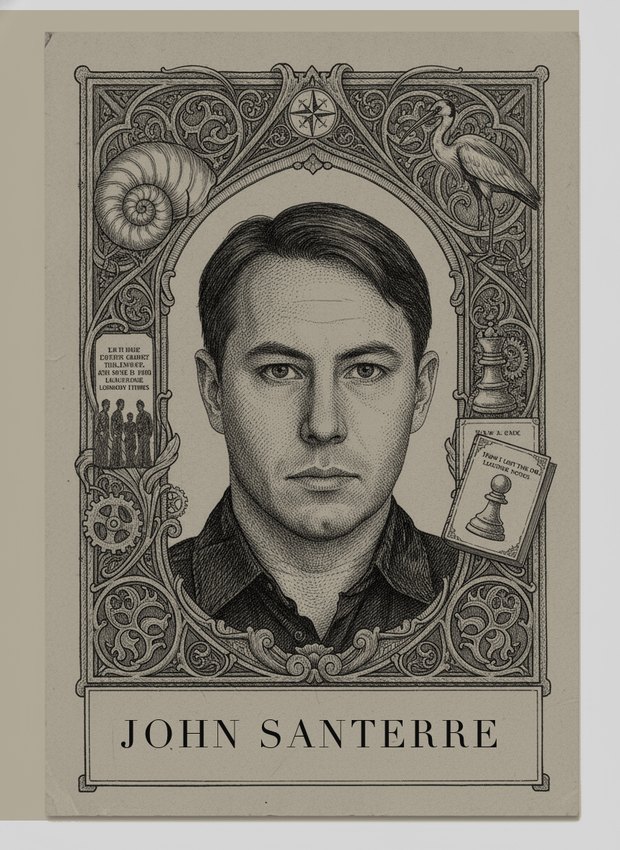
The professor arrives at Bell Labs a year late, waving a laptop that does not yet exist in 1949, and confidently proposes evaluating chess positions by 'just asking the model,' at which point Shannon, mid-sentence about material and mobility weightings, simply blinks. He tries to explain that brute-force search will eventually run on something called a GPU; the room stares, because vacuum tubes are the state of the art and he has just described science fiction badly. Turing, sketching Turochamp on a napkin nearby, quietly finishes a working design before the professor finishes his slide transition. He loses this one before the first move is even played, mostly to the calendar, but partly, and more damningly, to Shannon.
Battle #47 · 8/9/2026, 8:37:41 PM · this result is deterministic: the same two personas on this problem always resolve the same way.