It is 1976 at Carnegie Mellon, and DARPA's five-year speech bet is coming due: recognize continuously spoken sentences over a thousand-word vocabulary — no pauses between words, real speakers — under a program many advisors expected to fail. Rival philosophies share the building: a blackboard where knowledge sources argue about hypotheses, and a brute compilation of every legal sentence into one enormous network searched with beam-pruned dynamic programming. Deliver a system that meets the specification, and account honestly for the finding that stings: the elegant reasoning architecture loses to the compiled network that simply searches — a decade before statistics completes the same lesson. Get the accounting wrong and speech research spends its next funding cycle rebuilding the architecture the evidence just buried.
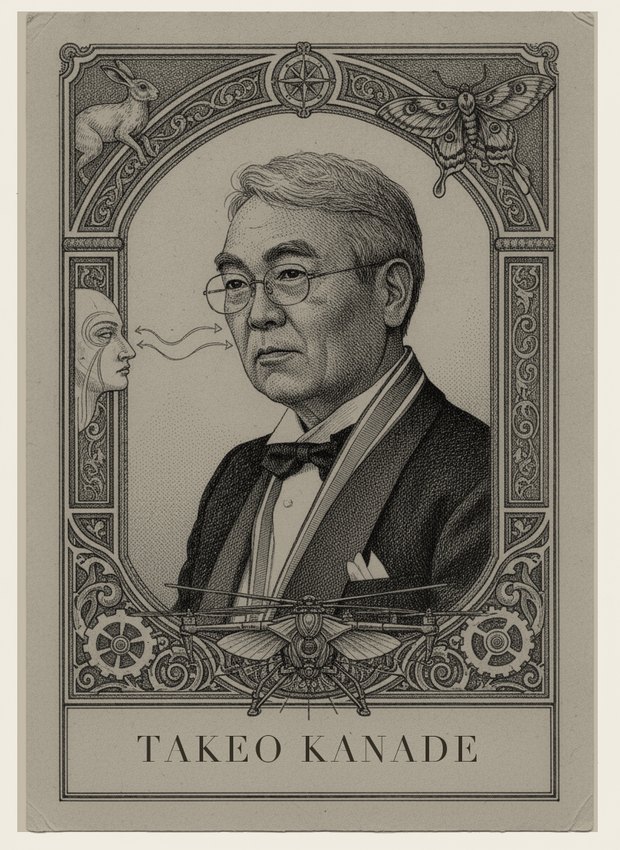
Kanade joined Carnegie Mellon's faculty in 1980, a few years after this problem's 1976 setting, but spent his subsequent career in exactly the institutional environment that produced Hearsay-II and Harpy, absorbing CMU's engineering culture of building working systems under real deadlines rather than pursuing elegance for its own sake. His own research area, computer vision rather than speech, means he did not contribute directly to either system or to the DARPA Speech Understanding program's actual findings. The institutional and temperamental proximity — CMU's insistence on delivering systems that work, the same discipline Reddy's team needed — is real, but the specific speech-recognition engineering this problem demands is outside his own body of work.
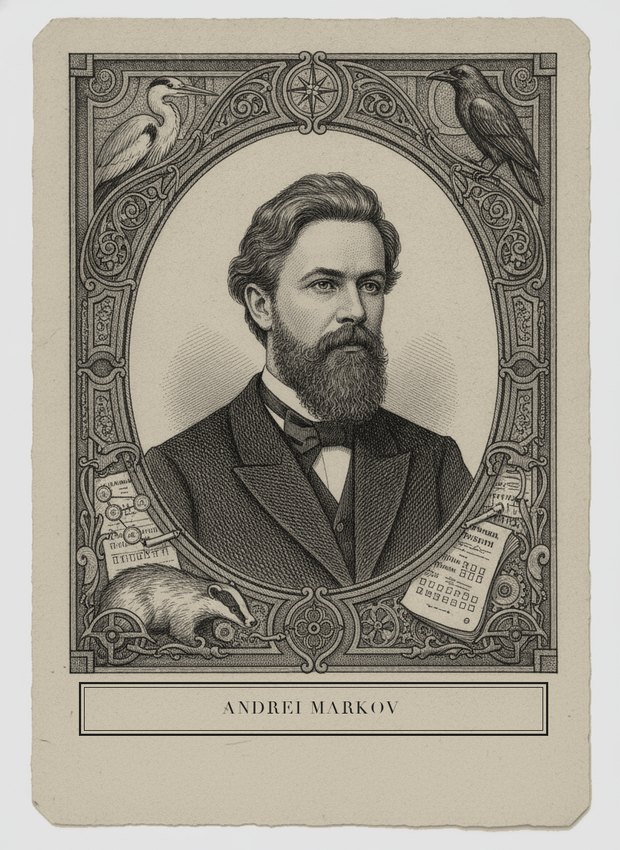
Markov's early-twentieth-century work on chains with the memoryless property — demonstrated on letter sequences in Pushkin's Eugene Onegin — is the direct mathematical ancestor of treating a sentence as a sequence of states searched probabilistically, the formal backbone underneath both Harpy's compiled network and the statistical speech recognition that would fully displace symbolic reasoning a decade later, a lesson this problem explicitly foreshadows. His chains give the state-transition structure a compiled sentence network needs to be searchable at all. He has no notion of acoustic signals, phonemes, or a DARPA funding deadline, and 1976 CMU's actual implementation used considerably more engineering — beam pruning, acoustic-phonetic knowledge sources — than his pure mathematics provides on its own, so real translation separates his contribution from the finished system.
Battle #73 · 8/10/2026, 11:36:16 AM · this result is deterministic: the same two personas on this problem always resolve the same way.