computability
Is this number prime?
It is the age when secrets travel on public wires, and the security of nearly every encrypted connection rests on multiplying two large primes — which means, first, being able to find them. Given a number hundreds of digits long, decide efficiently whether it is prime. Trial division is hopeless at this size; the practical answer for decades is a fast randomized test with a controllable error, and the deep question, settled in 2002, is whether a guaranteed-correct polynomial-time test exists at all. Establish where primality sits in the landscape. Get it wrong and either key generation is too slow to use, or a composite masquerades as prime and every certificate built on it is breakable — public-key cryptography waits on this decision.
Who this problem belongs to
The two figures whose methods fit it best, out of 43 in contention.
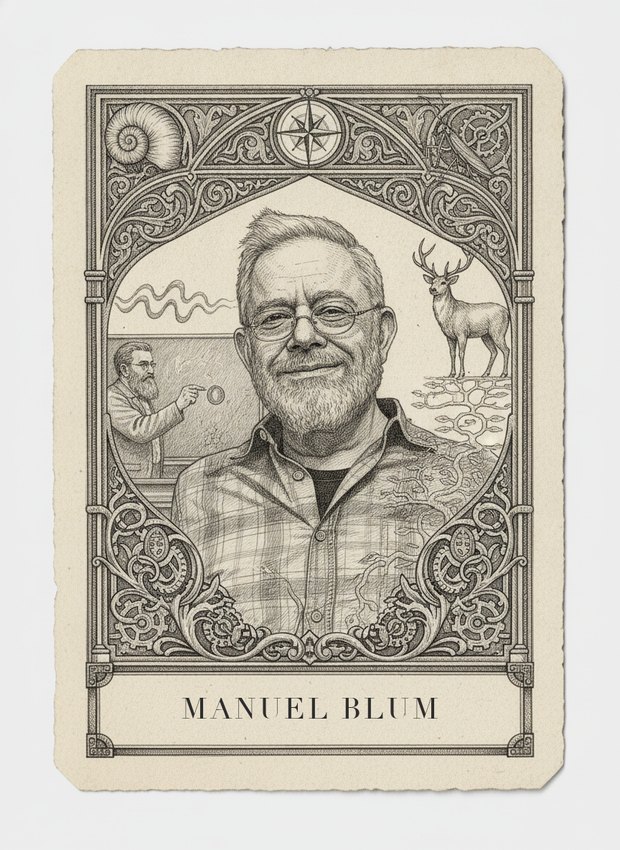
Blum's research is directly and technically embedded in this problem's territory: Blum integers, products of two primes each congruent to 3 modulo 4, are a foundational cryptographic construction bearing his name, built explicitly on the practical need to efficiently find and verify large primes, and his broader computational complexity career treats number-theoretic hardness and randomized algorithms as central objects of study. His work on program checking and interactive proofs engages directly with verifying computational claims efficiently, closely related to how a primality certificate is verified. He did not personally invent Miller-Rabin or AKS, but few figures on this roster combine his depth of number-theoretic cryptographic construction with complexity-theoretic rigor. This remains a marginal, secondary connection at best.
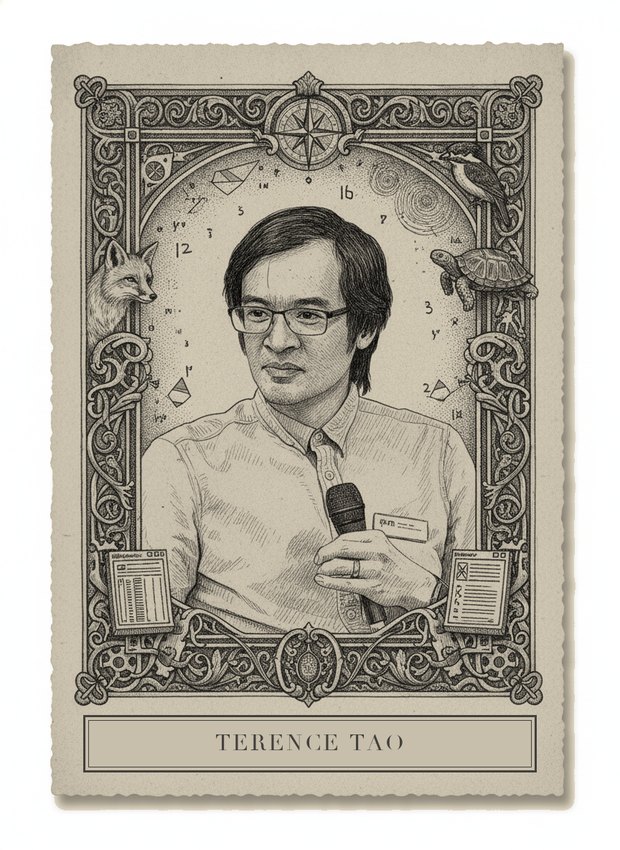
Tao is a working analytic number theorist whose own research touches prime number distribution and related deep number-theoretic questions directly, and his general mathematical power and rigor place him unusually close, among contemporary figures, to the specific mathematical machinery — modular arithmetic, polynomial identities, the AKS algorithm's algebraic structure — this problem's 2002 resolution actually uses. His command of both classical analytic number theory and modern computational complexity theory is unusually complete for a single mathematician. He works decades after the classical Fermat-style and Miller-Rabin tests were developed and after the AKS breakthrough itself, engaging with this territory as an heir and occasional contributor to adjacent number-theoretic questions rather than as the primality-testing algorithm's original author.
In the mind map
The same ideas, as concepts rather than history — in John's ML knowledge map.
43 figures are scored on this problem. Draw it in a battle to see where you land.