games
Sixty actions a second, no full view
It is 2019, and the ladder from board games has run out of rungs: the next benchmark is a real-time strategy game — vast maps seen only in fragments, hundreds of units, thousands of decisions a minute, and human professionals with a decade of muscle memory. Beat them. Turn-based search is dead here; the agent must act from partial observation under a human-comparable action-rate cap, trained by a league of self-play agents deliberately seeded with exploiters so the champion cannot overfit to one meta. The compute bill runs to millions. Get it wrong and the agent wins on inhuman clicking rather than strategy, and the milestone is hollow; get it right and self-play conquers its first genuinely messy, partially observed world.
Who this problem belongs to
The two figures whose methods fit it best, out of 59 in contention.
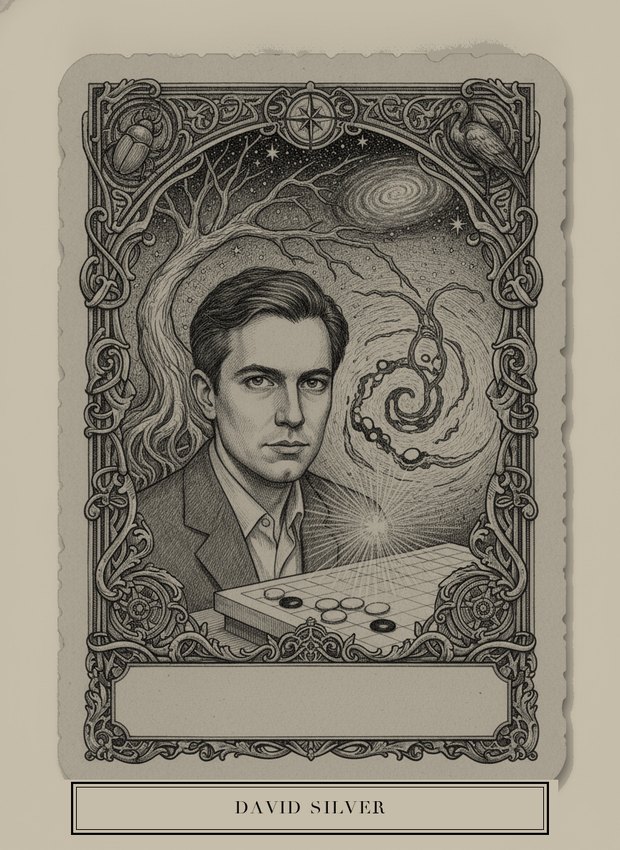
This is Silver's own research program at DeepMind, extended into exactly the territory it needed to reach next. AlphaGo (2016) and AlphaZero (2017) proved self-play reinforcement learning could master perfect-information board games without human heuristics; AlphaStar (2019), which Silver's group built directly, pushed the same core machinery -- large-scale self-play, learned value and policy networks, massive compute -- into StarCraft II's genuinely harder regime: partial observability, a human-comparable action-rate cap, and a league of agents deliberately seeded with exploiters to prevent overfitting to one strategy. The population-based training and league structure that beat human professionals in 2019 is Silver's own team's direct engineering answer to this exact problem. The only reason this is not a perfect score is that AlphaStar's specific league-training innovations were a genuine advance even beyond his own earlier work.
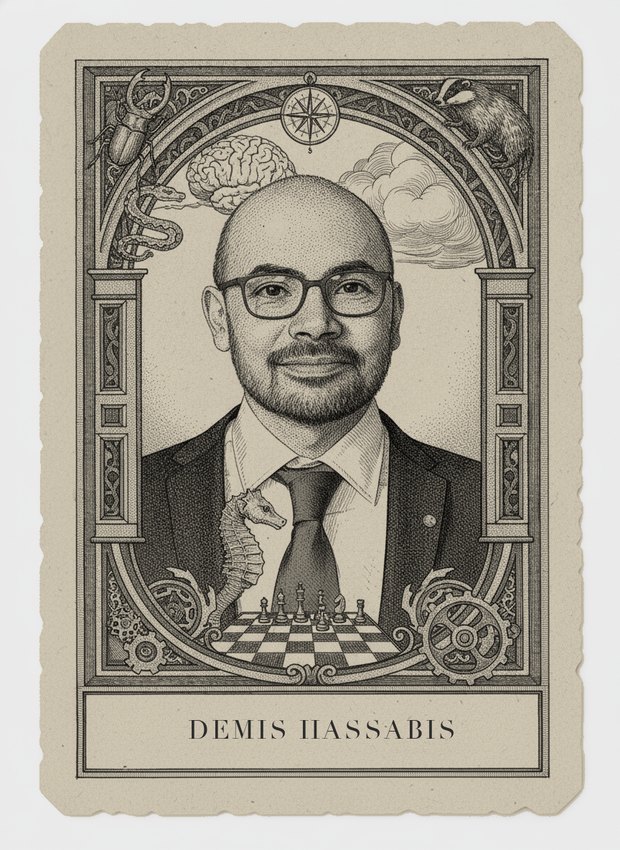
Hassabis founded and led DeepMind on the thesis that self-play and reinforcement learning, given enough compute, could conquer progressively messier, less idealized game environments, and AlphaStar's 2019 StarCraft II victory over human professionals was the direct execution of that thesis under his direction, following the same institutional and research trajectory as AlphaGo and AlphaZero. His role was setting the research agenda and resourcing a multi-year, compute-intensive project rather than personally engineering the league-based self-play system, which is why this sits just behind Silver's more hands-on technical contribution. Hassabis's consistent bet that general learning systems would eventually handle partial observability and real-time constraints without hand-coded game-specific heuristics is exactly the bet AlphaStar's success vindicated.
In the mind map
The same ideas, as concepts rather than history — in John's ML knowledge map.
59 figures are scored on this problem. Draw it in a battle to see where you land.