rl
Cool the datacenter
It is 2016, and a reinforcement-learning team has been handed something unprecedented: live control levers on real industrial plant — the cooling systems of a hyperscale datacenter, a maze of pumps, chillers, and cooling towers whose interactions defeat the hand-tuned setpoints of the best operations engineers. Cut the cooling energy. The constraints invert the usual research posture: exploration cannot brown out servers running the world's traffic, so learning leans on models fitted to years of sensor logs, actions ship through safety envelopes with operator veto, and every recommendation must be explicable to the engineer who overrides it. Get it wrong once, visibly, and human operators — correctly — never trust the controller again; get it right and forty percent of the cooling bill, at fleet scale, is the proof.
Who this problem belongs to
The two figures whose methods fit it best, out of 32 in contention.
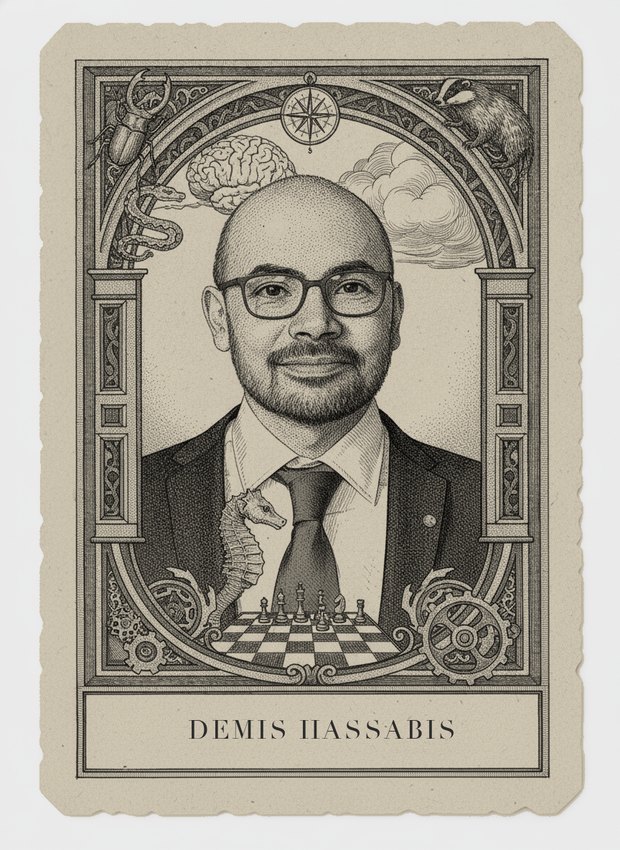
Hassabis founded DeepMind and personally announced the 2016 result this problem describes: applying DeepMind's neural-network modeling to Google's datacenter cooling systems, cutting energy used for cooling by roughly forty percent using models trained on years of sensor logs rather than live exploratory control. His research background, spanning neuroscience, games, and simulation-based planning, shaped DeepMind's house style of learning predictive models from data and optimizing recommendations that human engineers could veto, exactly the safety envelope and human-override structure this problem specifies. He was the public face of the collaboration with Google's data-center operations engineers, and the framing of the project, prove value at fleet scale without ever browning out live traffic, reflects his own stated philosophy about deploying AI in high-stakes real infrastructure carefully.

Silver led reinforcement learning research at DeepMind through the years this datacenter project was built, and his broader methodological signature, learning value estimates and policies that can be validated offline before ever touching a live system, is precisely the discipline the cooling project required: exploration on real chillers was never acceptable, so the actual system leaned on models fitted to historical sensor logs rather than online trial and error. His parallel work on AlphaGo, built and validated extensively before any public match, shows the same instinct for offline rigor before deployment. Where the fit is imperfect is method: the datacenter system was closer to supervised model-based optimization with human-approved recommendations than to Silver's more famous self-play and TD-learning results, so he is DeepMind's culture applied here more than its named algorithm.
In the mind map
The same ideas, as concepts rather than history — in John's ML knowledge map.
32 figures are scored on this problem. Draw it in a battle to see where you land.