It is 1997 at Berkeley, and segmentation keeps failing the same way: methods that grow regions from local pixel similarity fragment every textured surface and leak across every soft boundary, because grouping is a global judgment being made with local evidence. Recast the image as a graph — pixels as nodes, affinities as weighted edges — and partition it by a criterion that charges a cut not by raw weight but by its share of each side's total association, so carving off one stray pixel stops being free. The optimum is NP-hard; show the relaxation that lands in the eigenvectors of a graph Laplacian, computable, principled, honest about its gap. Get it wrong and grouping remains hand-tuned heuristics; get it right and spectral methods enter vision's bloodstream.
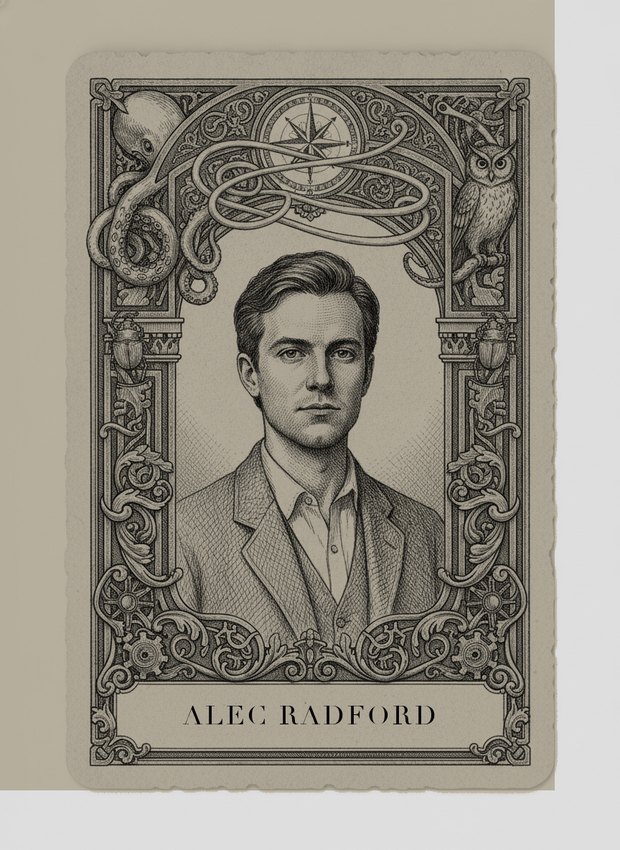
Radford's GPT-style generative pretraining and CLIP's joint image-text learning, developed decades after this problem's 1997 setting, center on large-scale self-supervised representation learning, a different research focus than this problem's classical graph-theoretic segmentation method built on spectral relaxation. He never worked on image segmentation via graph Laplacians or the specific normalized-cuts method this problem requires, leaving little direct connection. The gap between his own career and this 1997 method is total. Nothing more to add, the gap is total. His generative-pretraining legacy simply postdates and structurally differs from the classical spectral method this problem specifies by decades. The historical record here is simply unambiguous about whose contribution this actually is. history is clear on this point.
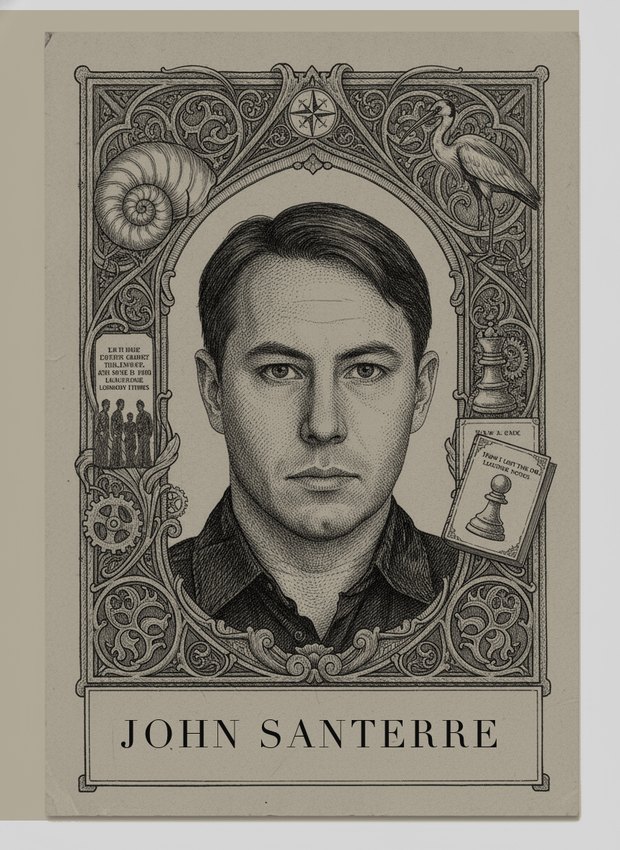
The professor draws a picture of an image as a bunch of dots connected by lines and starts explaining why grouping is hard, while three feet away Shi and Malik already have the eigenvectors of the Laplacian computed and the segmentation displayed on screen. By the time he gets to "so we need a global criterion, not a local one," half the room has already derived the normalized-cut objective themselves on the whiteboard he hasn't finished erasing. He owns a slide titled "why segmentation is NP-hard," which is not the same as owning a tractable spectral relaxation with an honest approximation bound. The joke and the honest self-assessment are the same fact: he teaches the slide about the method, and everyone else in this room has run the method.
Battle #149 · 8/10/2026, 11:40:29 AM · this result is deterministic: the same two personas on this problem always resolve the same way.