classification
A thousand categories
It is 2012, and a benchmark of over a million photographs sorted into a thousand fine-grained categories — dozens of dog breeds, hundreds of objects — has stood as the wall hand-engineered vision cannot climb: leading error rates crawl down by fractions for years. Classify these images at scale, and settle the decade-long argument — whether features must be crafted by experts or can be learned end to end from pixels, given enough data and parallel compute. The public scoreboard is watching. Get it wrong and either you overclaim for a method that does not generalize, or dismiss the result that, in a single year, redirects the field's money, talent, and imagination toward learned representations.
Who this problem belongs to
The two figures whose methods fit it best, out of 71 in contention.
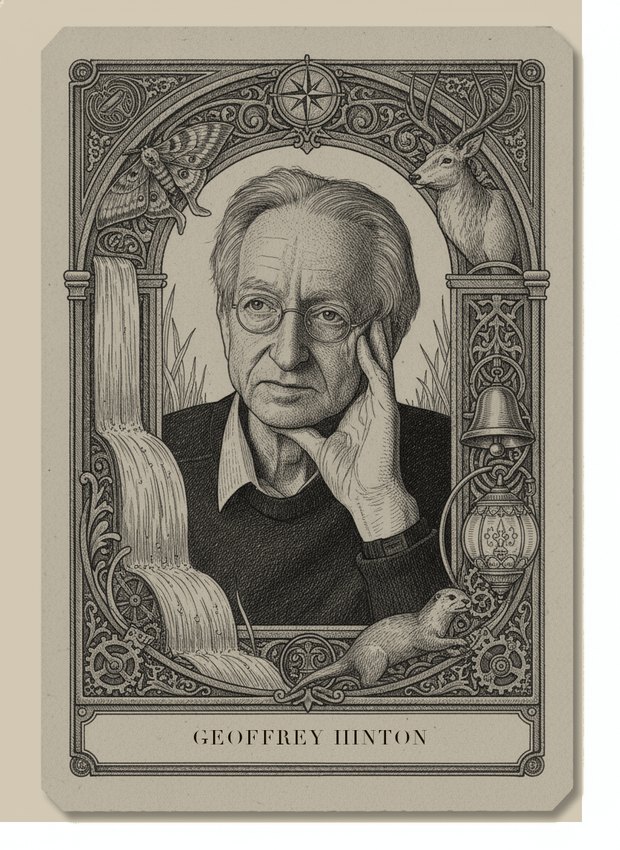
This is Hinton's decisive victory almost by definition. In 2012 his lab, with students Alex Krizhevsky and Ilya Sutskever, entered AlexNet into the ImageNet Large Scale Visual Recognition Challenge and beat the best hand-engineered-feature systems by an unprecedented margin, roughly ten percentage points, using a deep convolutional network trained end to end on GPUs with dropout and ReLU activations. This single result did more than any other event to settle the argument this problem describes, redirecting the field's money, talent, and imagination toward learned representations within a year. Hinton had spent three decades defending connectionist, gradient-trained networks through the field's coldest periods specifically so this moment could happen. The only reason this is not a full 100 is that Krizhevsky and Sutskever, not Hinton personally, wrote the winning code.
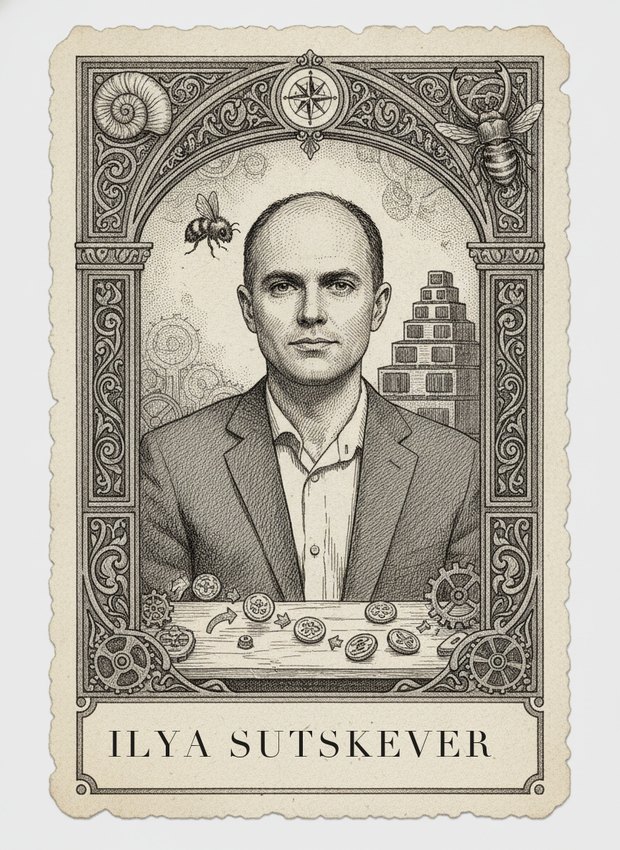
Sutskever is a co-author of AlexNet itself, the exact system this problem describes: with Krizhevsky and under Hinton's supervision, he helped design and train the eight-layer convolutional network that won the 2012 ImageNet challenge by a margin so large it ended the argument between hand-crafted features and learned representations within a single publication cycle. His subsequent conviction, that scale of data, parameters, and compute reliably improves deep networks, was forged directly in this result and became the organizing principle of his later career at OpenAI. He was, quite literally, in the room writing the CUDA kernels that made training feasible on consumer GPUs. Almost no one in this roster has a more direct historical claim on this exact problem.
Fought here
In the mind map
The same ideas, as concepts rather than history — in John's ML knowledge map.
71 figures are scored on this problem. Draw it in a battle to see where you land.