games
Solve the game, completely
It is 2007 at the University of Alberta, and checkers — the game Samuel's program made famous — is about to become the largest game ever solved: not played well, solved, its value proven. Combine forward search from the opening with endgame databases computed backward from every position of ten pieces or fewer — thirty-nine trillion of them — until the proof tree closes and the verdict is certain: perfect play draws. The computation runs for years across many machines; a single corrupted entry poisons the proof. Marshal it, verify it, and defend the word "proof" for a result no human can check by hand. Get it wrong and a decade of compute yields a claim, not a theorem — and the difference is the entire point.
Who this problem belongs to
The two figures whose methods fit it best, out of 52 in contention.
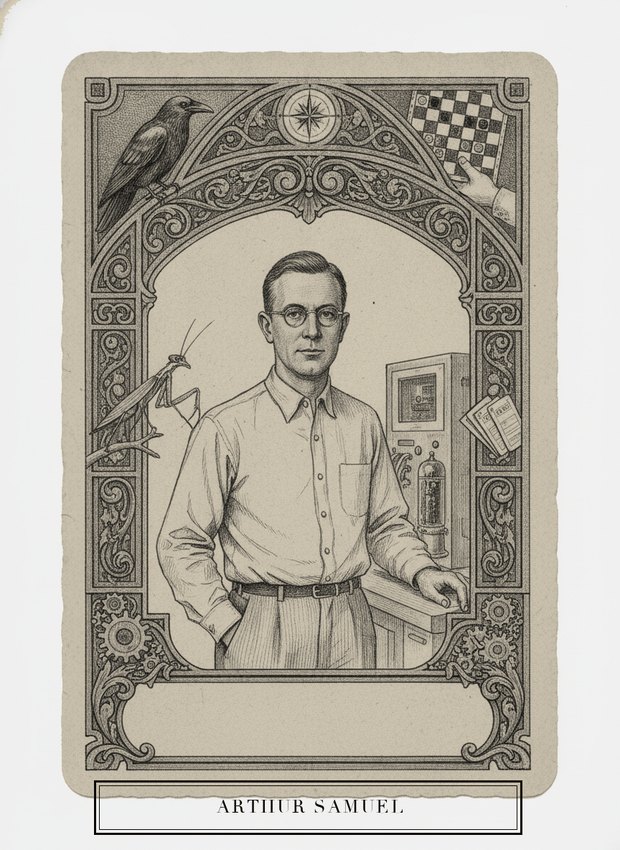
This is, almost literally, his unfinished business. Samuel's checkers program, developed at IBM through the 1950s and refined into the 1960s, was the machine that first made checkers a serious computing benchmark and coined the term 'machine learning' along the way, though his program played well rather than solved the game outright. Jonathan Schaeffer's Chinook project at the University of Alberta picked up exactly the game Samuel made famous and pushed it from strong play to a formal proof of perfect play in 2007, combining forward alpha-beta search with retrograde endgame databases computed for all positions of ten pieces or fewer. Samuel had neither the storage nor the distributed compute for a thirty-nine-trillion-position database, so his contribution is the game's founding legacy rather than the proof technique itself, which is why this stops short of a perfect score.
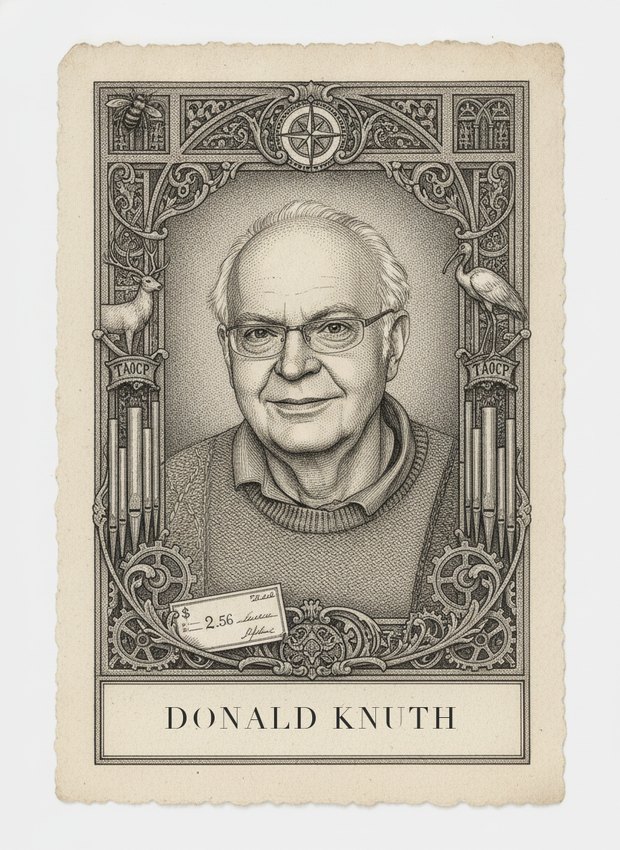
Knuth's The Art of Computer Programming and his decades of rigorous work on combinatorial algorithms, exhaustive search, and the precise analysis of computational cost give him arguably the sharpest tools in the roster for exactly this problem: marshaling a retrograde endgame database of thirty-nine trillion positions and proving, not merely claiming, that the computation is correct. His obsessive standard for verifiable correctness, most visible in his insistence on near-zero-bug software like TeX, is precisely the discipline needed when a single corrupted database entry can silently poison a years-long distributed proof. Knuth did not work on checkers or retrograde analysis specifically, and the distributed-systems engineering of coordinating many machines over years was not his research focus, but the combinatorial and correctness apparatus he built is the closest thing in the field to a manual for this exact task.
Fought here
In the mind map
The same ideas, as concepts rather than history — in John's ML knowledge map.
52 figures are scored on this problem. Draw it in a battle to see where you land.