perception
Depth for a robot on Mars
It is January 2004 at JPL, and two rovers are on Mars where no joystick can reach them: a signal takes ten to twenty minutes each way, so the vehicles must see for themselves — stereo cameras turning paired images into depth maps, depth into traversability, under dust, harsh shadow, and terrain that mimics itself so featurelessly that correspondence fails exactly where the wheels most need it. Build the stereo pipeline for a radiation-hardened processor slower than a decade-old desktop: correlation matching with subpixel refinement, consistency checks that reject false matches rather than average them, and a conservative failure mode — because a wrong depth estimate is a rover axle-deep in a sand trap, and there is no tow truck on Mars. Autonomy budget: meters per sol.
Who this problem belongs to
The two figures whose methods fit it best, out of 60 in contention.
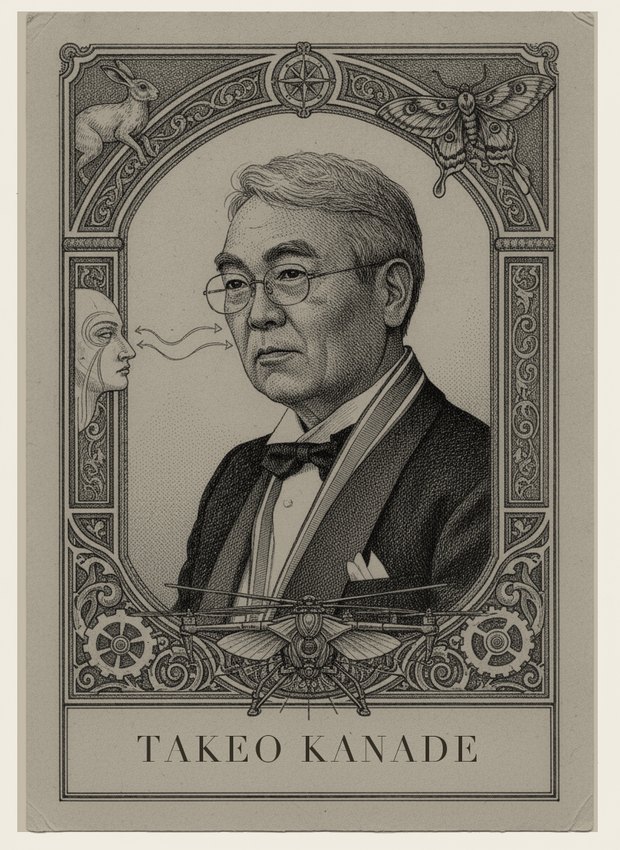
This problem's stereo pipeline is substantially Kanade's own research territory. His decades of work at Carnegie Mellon on stereo correspondence, including his multi-baseline stereo research and his rigorous treatment of correlation-based matching with subpixel refinement, are exactly the technique this problem specifies: correlate windows across two camera views, refine the disparity estimate to subpixel precision, and build in consistency checks that reject a false match rather than silently average it into a corrupted depth map. His career-long attention to making stereo vision work reliably under real, non-laboratory conditions — variable lighting, low-texture surfaces, degraded imagery — anticipates precisely the dust, harsh shadow, and self-similar terrain this problem describes. He was not personally on the Mars Exploration Rover team, so the radiation-hardened engineering constraints are not his own deployment, but the core stereo algorithm here is substantially his contribution.
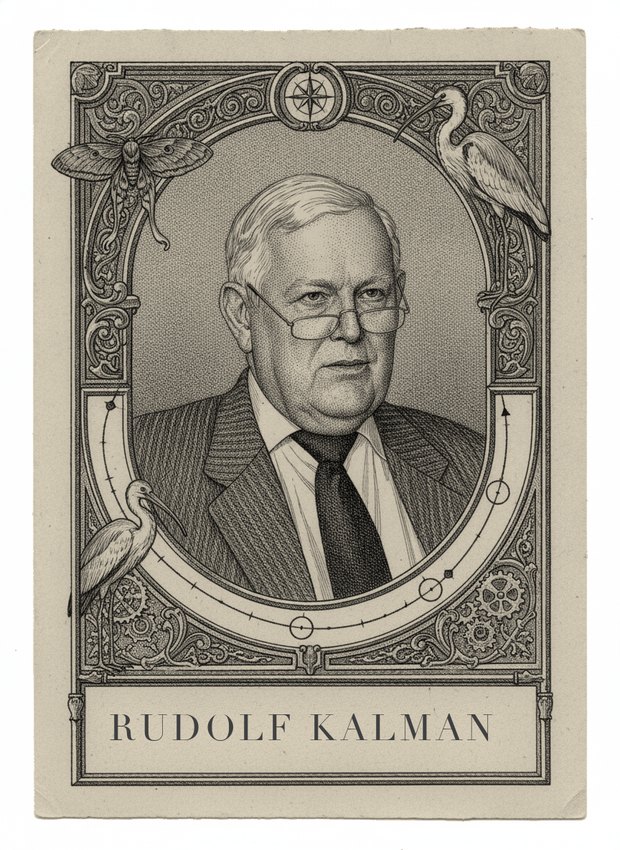
Kalman's 1960 filter, developed for optimal state estimation from noisy, sequential measurements, is the direct mathematical tool a rover needs to fuse noisy stereo depth readings with wheel odometry and inertial data into a trustworthy estimate of where it actually is and what terrain lies ahead — precisely the "conservative failure mode" this problem demands rather than naive trust in a single noisy sensor reading. His filter's built-in uncertainty propagation is exactly the honest bookkeeping this problem's sand-trap warning requires: know not just the estimate but how much to trust it. His filter was already flight-proven on Apollo guidance computers decades earlier, giving him genuine spaceflight pedigree. He did not personally work on the stereo algorithm itself or the specific JPL rover software, so the vision half belongs to others, though the state-estimation backbone is substantially his.
Fought here
In the mind map
The same ideas, as concepts rather than history — in John's ML knowledge map.
60 figures are scored on this problem. Draw it in a battle to see where you land.